
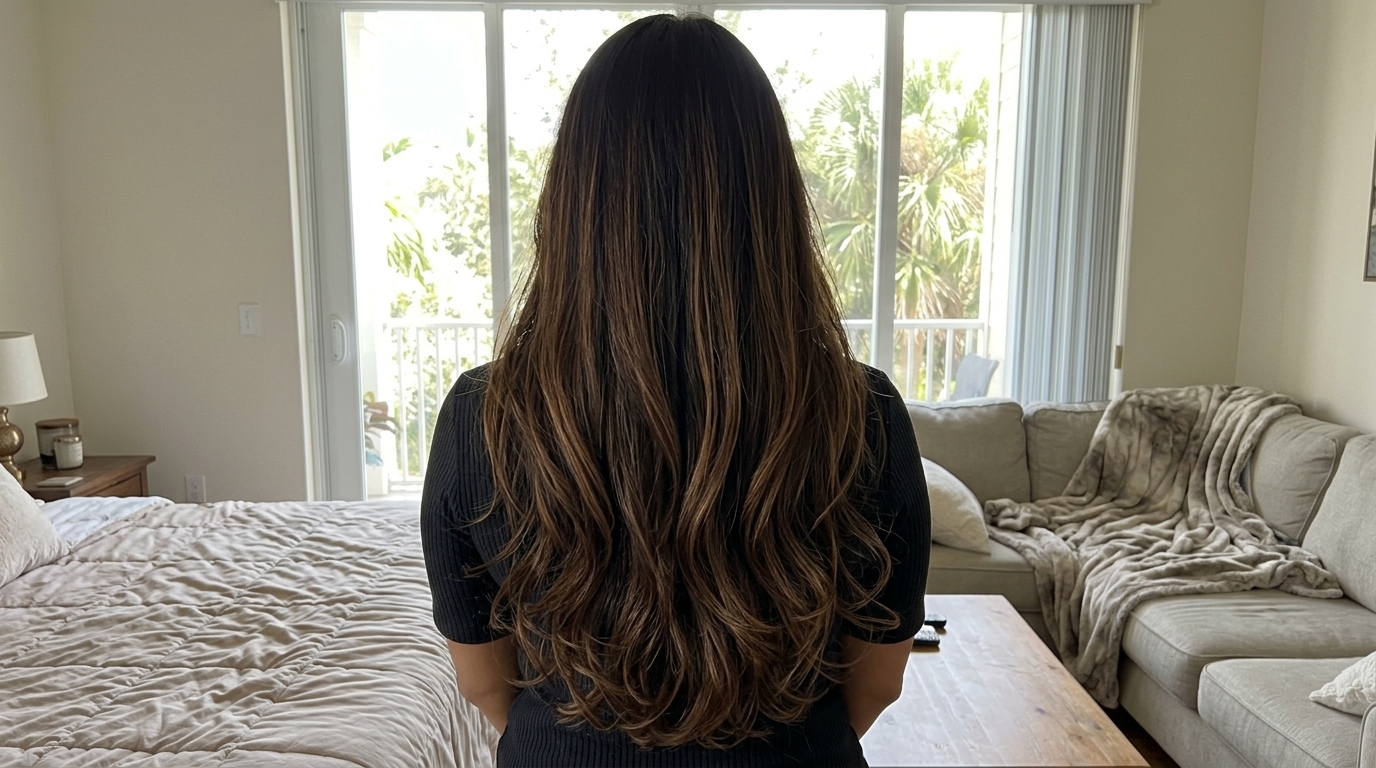
Caramel balayage on dark brown hair can be soft and barely noticeable or bright enough to create a clear contrast against the brunette base. The biggest difference comes from where the caramel begins, how wide the lighter pieces are, and how much dark brown remains visible.
Quick answer: Caramel balayage on dark brown hair combines a deep brunette base with softly blended caramel pieces through selected mid-lengths, ends, or face-framing sections. Keeping the roots darker creates a smoother transition, while brighter or wider caramel ribbons create more visible contrast.
This guide focuses specifically on balayage-style placement rather than all-over caramel highlights. Compare the root depth, ribbon size, warmth, contrast, and brightness in each look before choosing the direction you want to discuss with your stylist.
16 Caramel Balayage on Dark Brown Hair Ideas
These ideas range from subtle brunette dimension to stronger caramel contrast. Each one keeps the dark brown base visible, but the placement and amount of brightness change the overall effect.
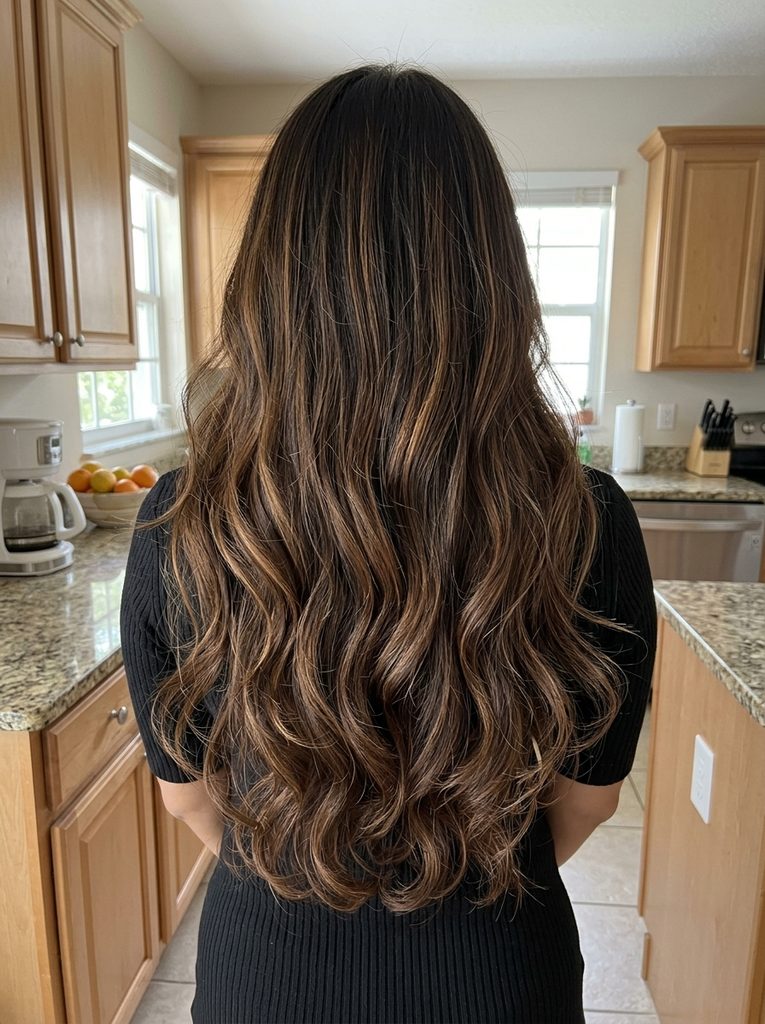
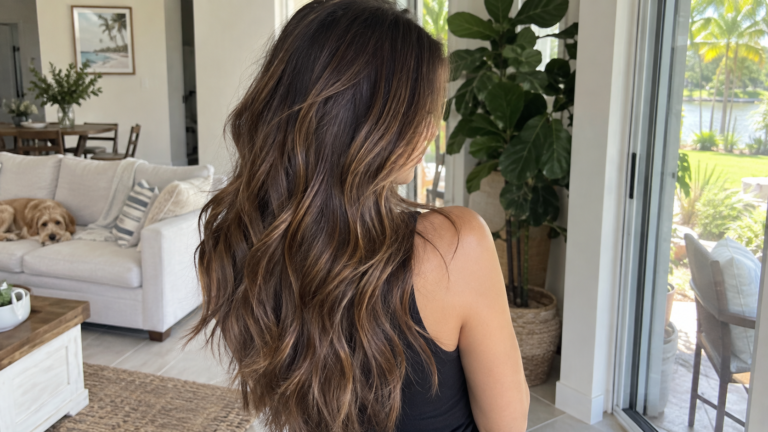
1. Soft Caramel Balayage on Dark Brown Waves
This is one of the softest ways to wear caramel balayage. Fine warm pieces begin through selected mid-lengths and gradually become easier to see toward the ends.
The dark brown base remains dominant, so the finished color still reads brunette first. Soft waves help reveal the caramel without making the placement look too structured.
Stylist reference: Ask for soft caramel balayage with low-to-medium contrast and plenty of dark brunette left between the lighter pieces.
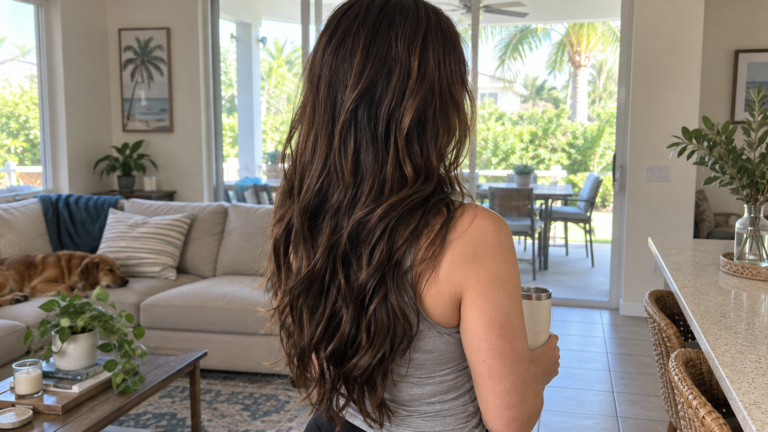
2. Dark Roots With Caramel Balayage Ends
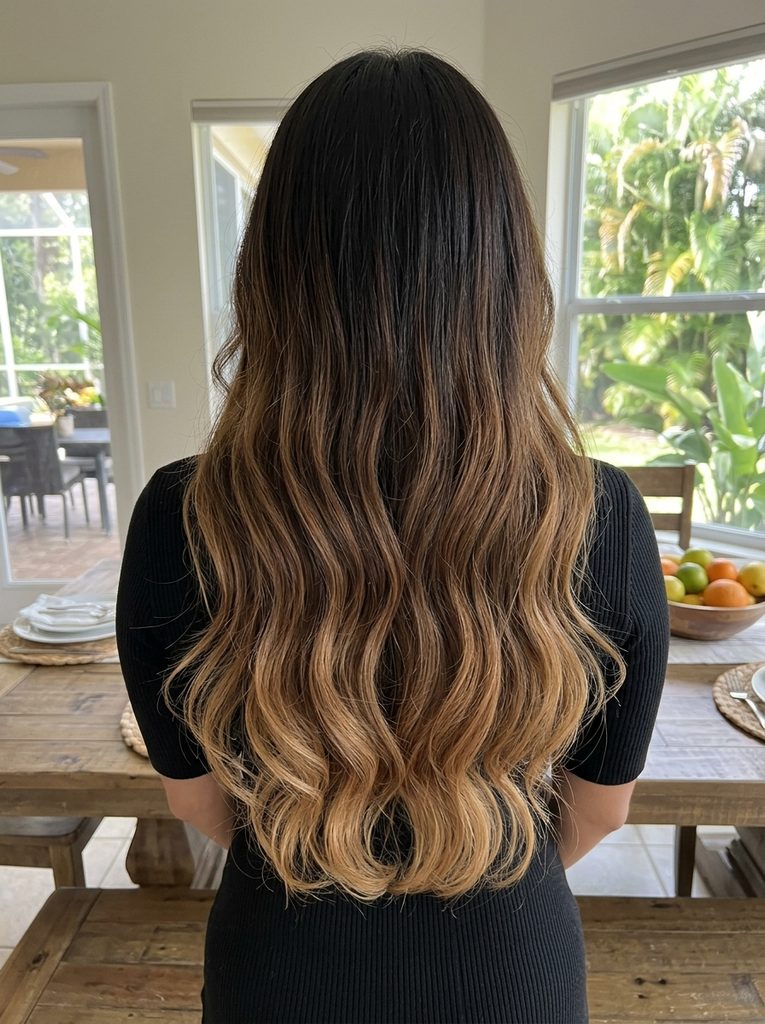
Keeping the crown and upper lengths dark creates a clear brunette foundation. The caramel becomes more noticeable farther down the hair, especially through the lower mid-lengths and ends.
This placement creates a gradual dark-to-warm transition rather than placing equal brightness from roots to ends.
Stylist reference: Ask to keep the roots deep brunette and concentrate the caramel balayage farther down the lengths.
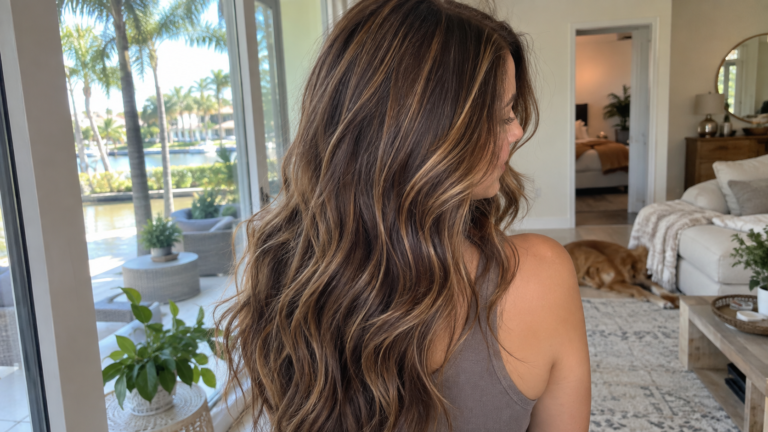
3. Chocolate Brown With Warm Caramel Balayage
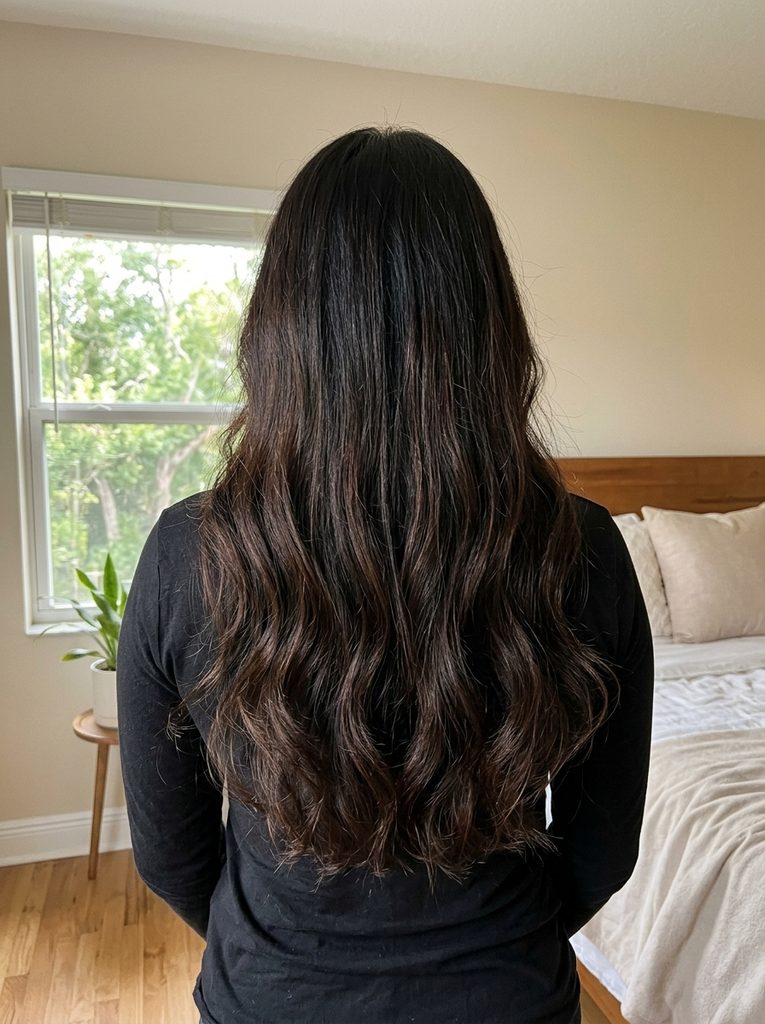
A chocolate-brown base and warm caramel pieces sit close enough in tone to create rich dimension without extreme contrast.
The lighter sections can move through the waves at different heights, which keeps the color looking blended instead of repetitive.
Stylist reference: Ask for a rich chocolate-brown base with warm caramel balayage and a smooth transition through the lengths.
4. Face-Framing Caramel Balayage on Dark Brown Hair
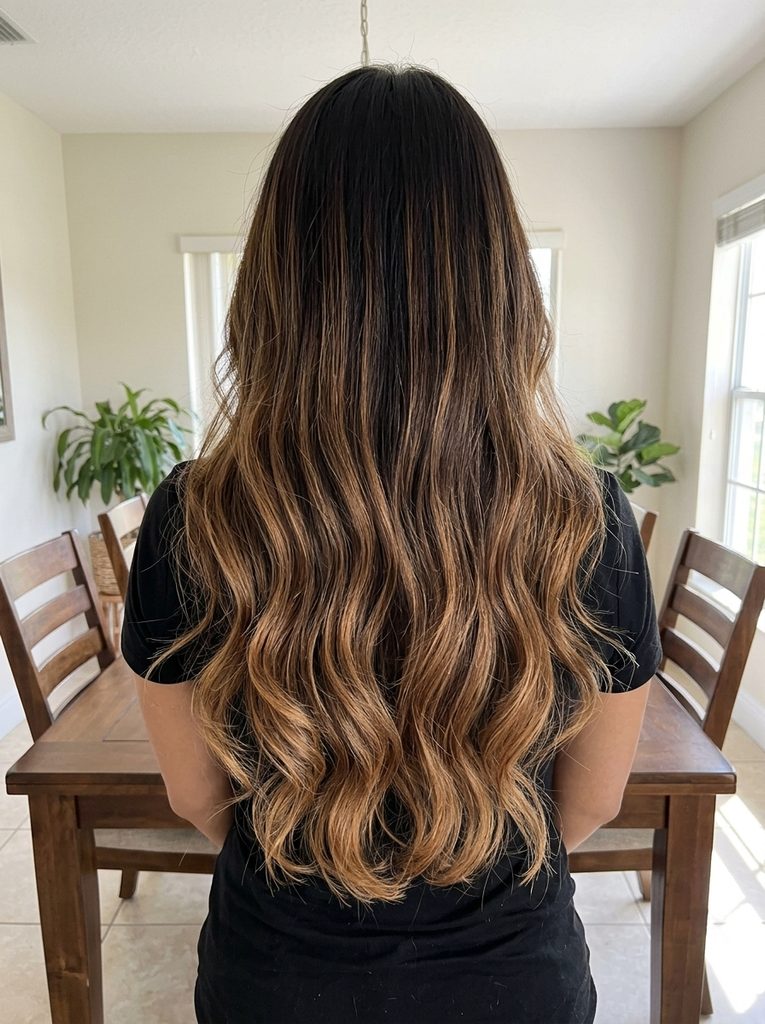
This look places more brightness around the front while the back and crown remain noticeably darker.
The face-framing sections do not need to become blonde. Keeping them within a warm caramel range helps them connect more naturally to the dark brunette base.
Stylist reference: Ask for brighter caramel around the front with softer matching balayage through the rest of the hair.
5. Subtle Caramel Ribbons on Deep Brunette Hair
Narrow caramel ribbons create movement without dramatically changing the overall color. The pieces stay fine and scattered rather than forming wide highlighted sections.
This is a useful reference if you want visible warmth but still want most of your hair to look dark brown.
Stylist reference: Ask for very fine caramel balayage ribbons with low contrast and strong brunette depth.
6. High-Contrast Caramel Balayage
For a stronger transformation, brighter caramel pieces can be placed against a deep dark brown base.
The contrast works best when darker sections remain visible between the lighter ribbons. That separation keeps the brunette foundation part of the finished look.
Stylist reference: Ask for high-contrast caramel balayage while preserving visible dark brunette sections between the lighter pieces.
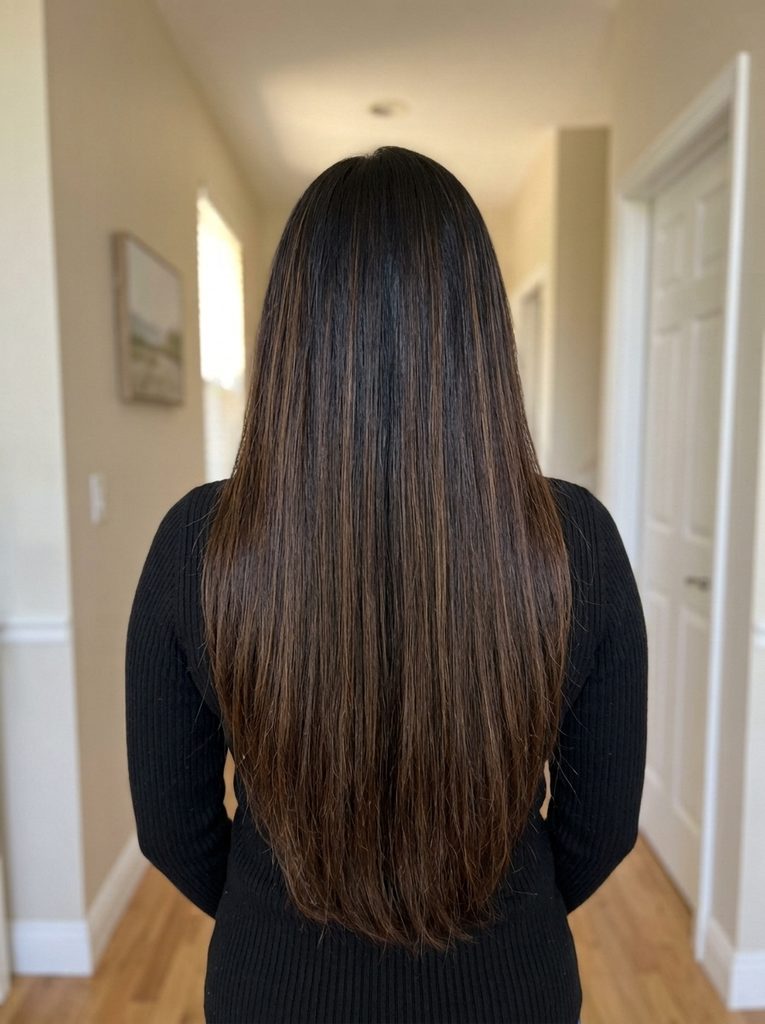
7. Caramel Balayage With a Soft Money Piece
A soft money-piece effect adds a little extra brightness around the front while the rest of the balayage stays more blended.
The front pieces can be slightly lighter than the caramel through the lengths without creating a disconnected block of color.
Stylist reference: Ask for a soft caramel money piece that blends into the rest of the balayage rather than standing alone.
8. Caramel Balayage Concentrated Through the Ends
This placement keeps most of the upper hair dark and lets the caramel build gradually toward the bottom.
On long hair, the transition has more space to move from deep brown into medium warm brown and then into brighter caramel ends.
Stylist reference: Ask for most of the brightness to stay through the lower half while preserving dark upper lengths.
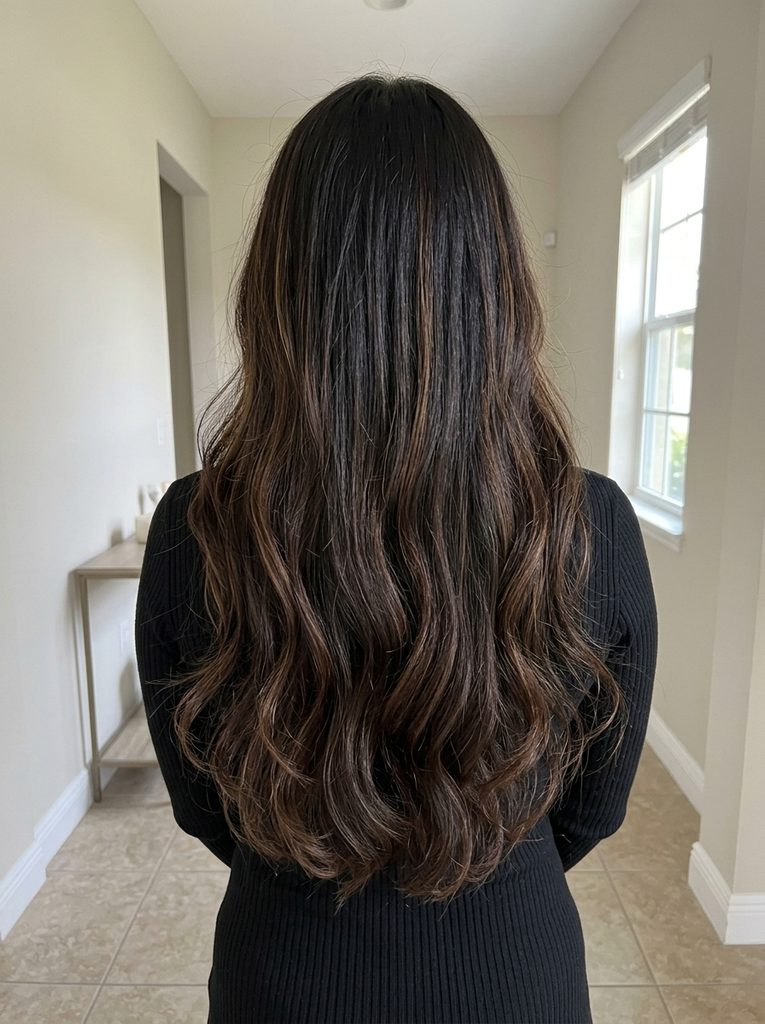
9. Mocha-Caramel Balayage on Dark Brown Hair
Mocha tones create a softer bridge between a deep brunette base and warmer caramel pieces.
Instead of seeing only dark brown and light caramel, the hair moves through several related brown tones. That makes the overall result feel more dimensional and less sharply divided.
Stylist reference: Ask for a dark brunette base with mocha transition tones and soft caramel accents.
10. Honey-Caramel Balayage on Dark Brunette Hair
Honey-caramel creates one of the warmer and brighter options in this list. The lighter ribbons stand out more clearly against a dark brown base.
Keeping the roots and some interior sections darker prevents the entire length from becoming uniformly light.
Stylist reference: Ask for warm honey-caramel balayage with dark root depth and visible brunette separation.
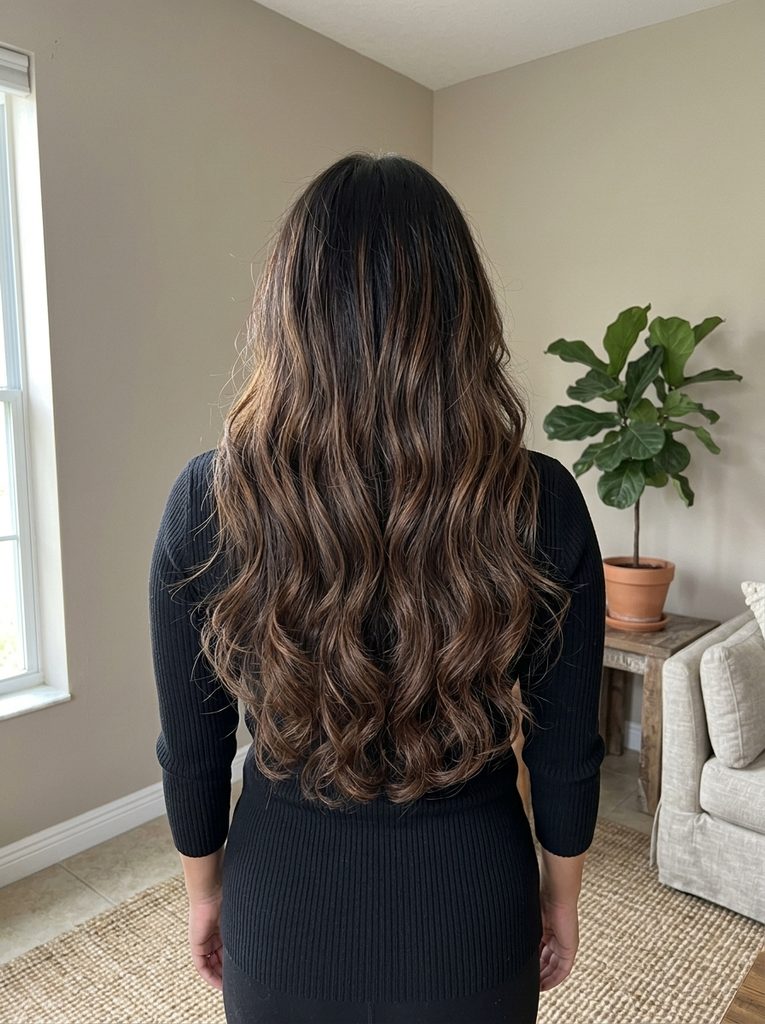
11. Beige-Caramel Balayage
Beige-caramel balayage tones down some of the obvious golden warmth while keeping the color lighter than the brunette base.
This direction creates a softer, more neutral-looking contrast than a very warm honey or golden caramel finish.
Stylist reference: Ask for neutral beige-caramel pieces with a blended dark brunette root.
12. Chestnut-Caramel Balayage on Very Dark Brown Hair
Chestnut-caramel sits deeper than bright golden caramel. It adds visible warmth while staying closer to the richness of a very dark brunette base.
In softer indoor light, the hair may still look mostly dark. Natural daylight can reveal more of the warm brown dimension.
Stylist reference: Ask for deeper chestnut-caramel balayage rather than bright golden pieces.
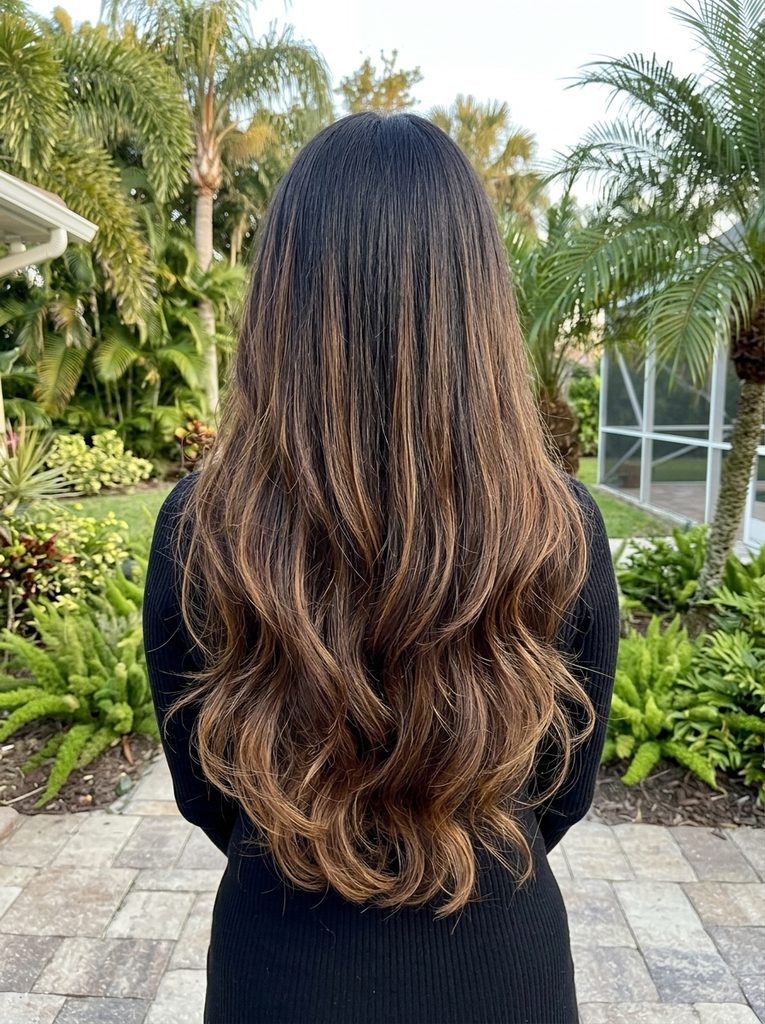
13. Straight Dark Brown Hair With Caramel Balayage
Straight hair makes placement more obvious because waves are not breaking up the lighter pieces.
Fine, irregular caramel sections can create a smoother finish than wide repeated ribbons. Keeping some darker lengths between them also helps preserve dimension.
Stylist reference: Ask for softly spaced caramel balayage designed to look blended when the hair is worn straight.
14. Layered Dark Brown Hair With Caramel Balayage
Layers create natural places for lighter color to appear. Selected caramel pieces through the layered sections can emphasize movement without brightening every part of the hair equally.
The upper hair can remain mostly brunette while more caramel appears through the moving ends.
Stylist reference: Ask for caramel balayage placed to follow the existing layers and movement of your haircut.
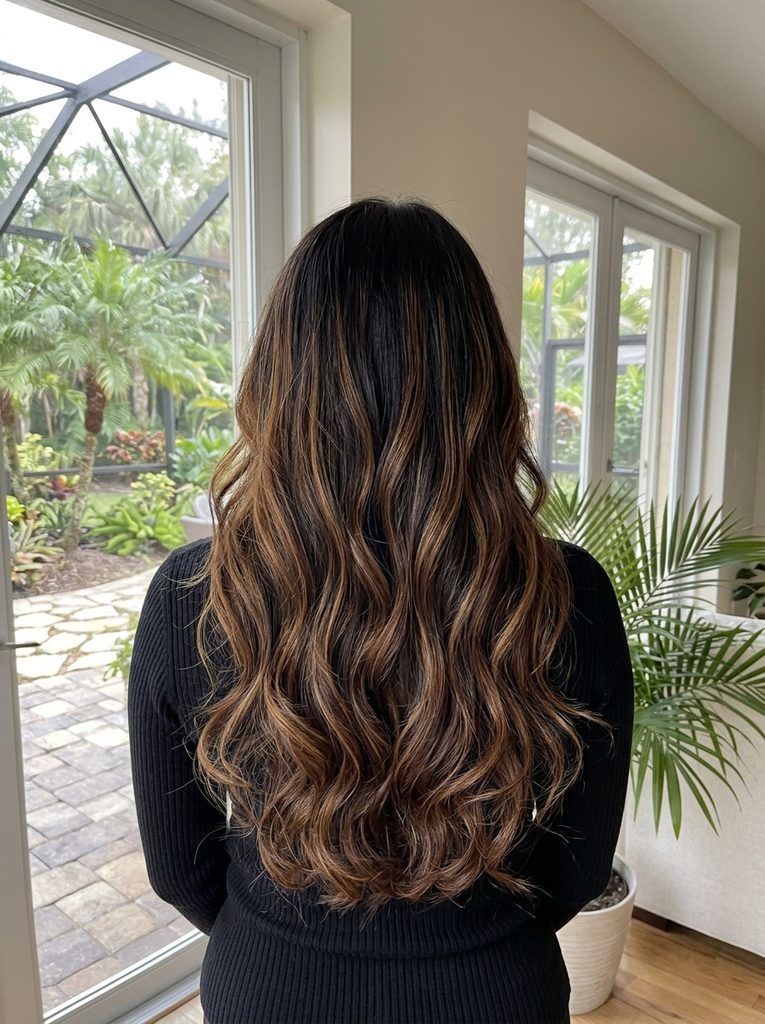
15. Curly Dark Brown Hair With Caramel Balayage
Curls break balayage into smaller areas of light and dark. Some curls can remain mostly brunette while others reveal more caramel through the bends.
A useful reference should show a curl pattern similar to how you usually wear your hair, because the placement can appear very different once the hair is curled.
Stylist reference: Bring a photo with a similar curl pattern and point out which curl sections you want to appear brighter.
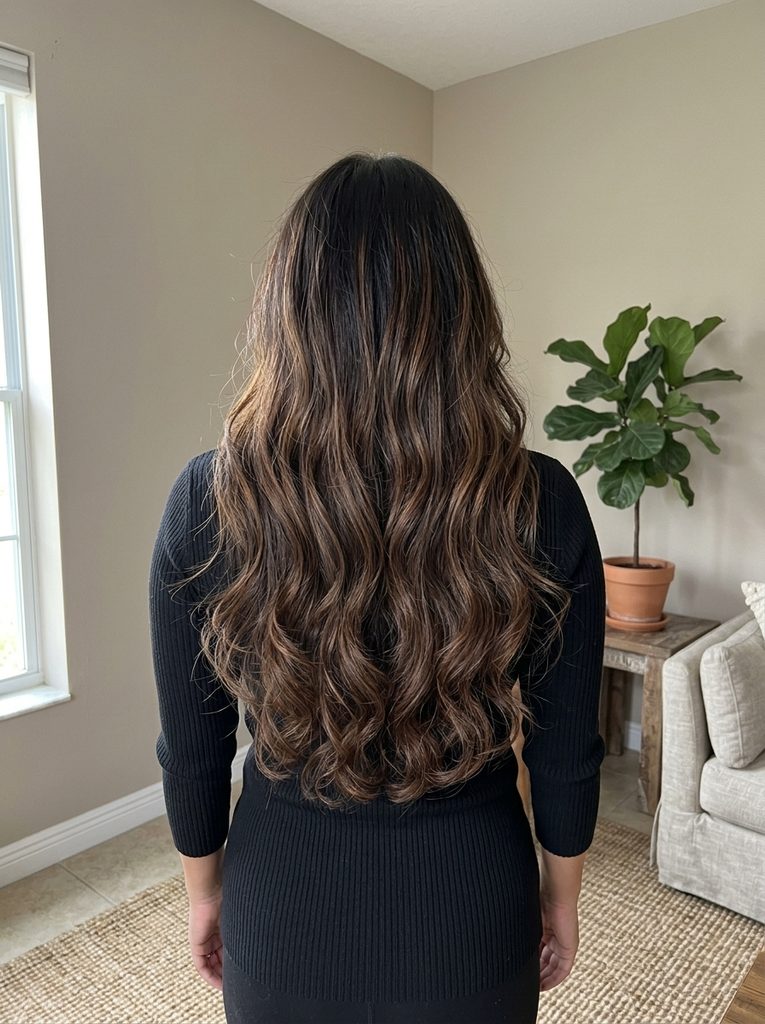
16. Multi-Tonal Caramel Balayage on Dark Brown Hair
This look uses more than one warm brown level instead of relying on a single caramel shade.
A deep brunette base can transition into medium warm brown, mocha-caramel, and lighter caramel accents. The related tones create depth without turning the hair into a simple dark-versus-light pattern.
Stylist reference: Ask for multi-tonal brunette balayage with several closely related caramel and warm-brown shades.
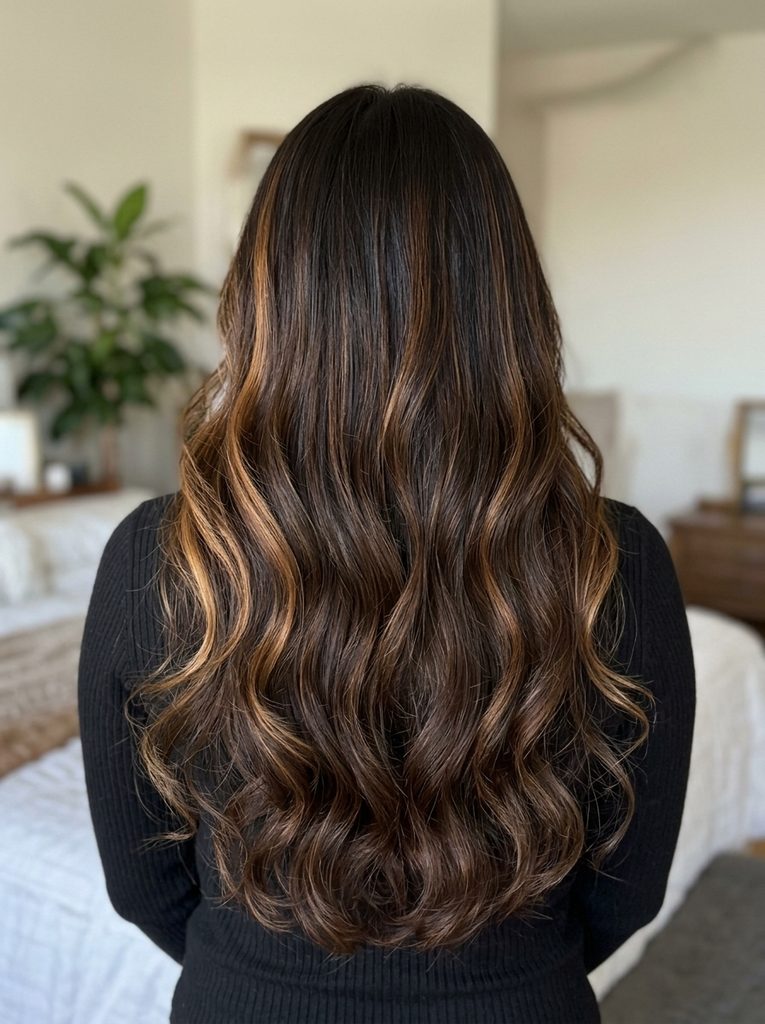
Caramel Balayage Ideas at a Glance
| Look | Contrast | Main Placement | Overall Feel |
|---|---|---|---|
| Soft Caramel | Low–Medium | Mid-lengths + ends | Natural and blended |
| Dark Root + Caramel Ends | Medium | Lower lengths | Gradual dark-to-light |
| Chocolate + Caramel | Low–Medium | Throughout lengths | Rich and dimensional |
| Face-Framing Caramel | Medium | Front + soft lengths | Brighter around the front |
| Fine Caramel Ribbons | Low | Scattered | Subtle |
| High Contrast | High | Visible ribbons | Bold |
| Soft Money Piece | Medium | Front | Focused brightness |
| Caramel Ends | Medium | Lower half | Rooted and gradual |
| Mocha-Caramel | Low–Medium | Blended throughout | Multi-tonal brunette |
| Honey-Caramel | Medium–High | Lengths + ends | Warm and bright |
| Beige-Caramel | Low–Medium | Softly distributed | Neutral |
| Chestnut-Caramel | Low | Selected ribbons | Deep and warm |
What Makes Caramel Balayage Look Different on Dark Brown Hair?
Four details change the look most: the depth of the brunette base, where the caramel begins, how warm the caramel is, and how much contrast you want.
Root depth: Keeping more dark brown near the crown makes the finished look feel more rooted and brunette.
Placement: Caramel concentrated through the lower lengths looks different from balayage that begins closer to the top or around the front.
Tone: Chestnut-caramel looks deeper, classic caramel looks warm and medium-bright, while honey-caramel creates more visible brightness.
Contrast: Fine pieces close to the brunette base create subtle dimension. Brighter and wider ribbons make the balayage easier to notice from a distance.
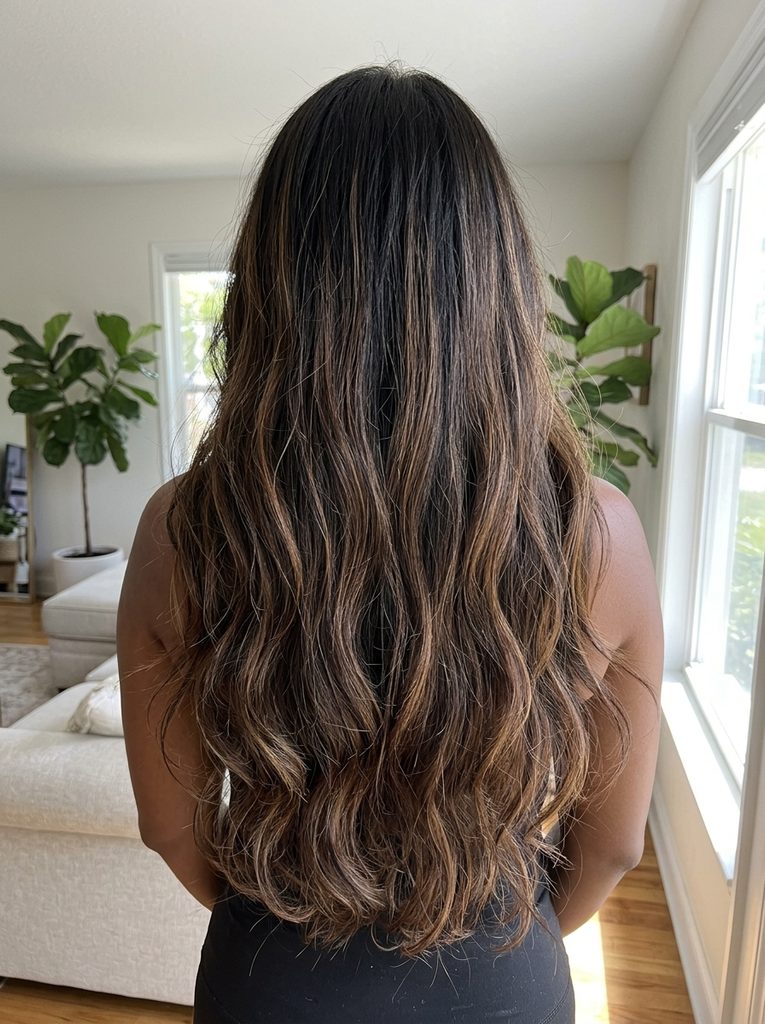
Caramel Balayage vs. Caramel Highlights on Dark Brown Hair
The finished looks can overlap, but they do not always create the same visual effect.
Balayage-style color usually emphasizes softer transitions, varied placement, darker root depth, and brightness through selected lengths. Highlighted looks can appear more evenly distributed or more structured depending on the placement.
If you want broader caramel-highlight inspiration beyond balayage, see our guide to dark brown hair with caramel highlights.
Subtle vs. Bold Caramel Balayage
Subtle caramel balayage stays closer to the depth of the brunette base. Fine ribbons, mocha-caramel transitions, and deeper chestnut tones create softer dimension.
Bold caramel balayage uses brighter pieces, wider ribbons, stronger face-framing sections, or more visible lightness through the ends.
Neither approach needs to cover the entire head. Keeping dark brunette sections visible is one of the easiest ways to preserve depth in both subtle and bold versions.
How to Choose the Right Caramel Tone
If you want the color to stay deep, compare chestnut-caramel and mocha-caramel references.
If you want a classic warm brunette look, medium caramel or toffee-like brown can create more noticeable dimension without becoming extremely bright.
If you want more visible warmth and brightness, compare honey-caramel references while paying attention to how much dark brunette remains around the crown and interior sections.
Save photos based on the exact tone you like rather than relying on the word “caramel” alone, because that label can describe several different levels of warmth and brightness.
What to Ask Your Stylist
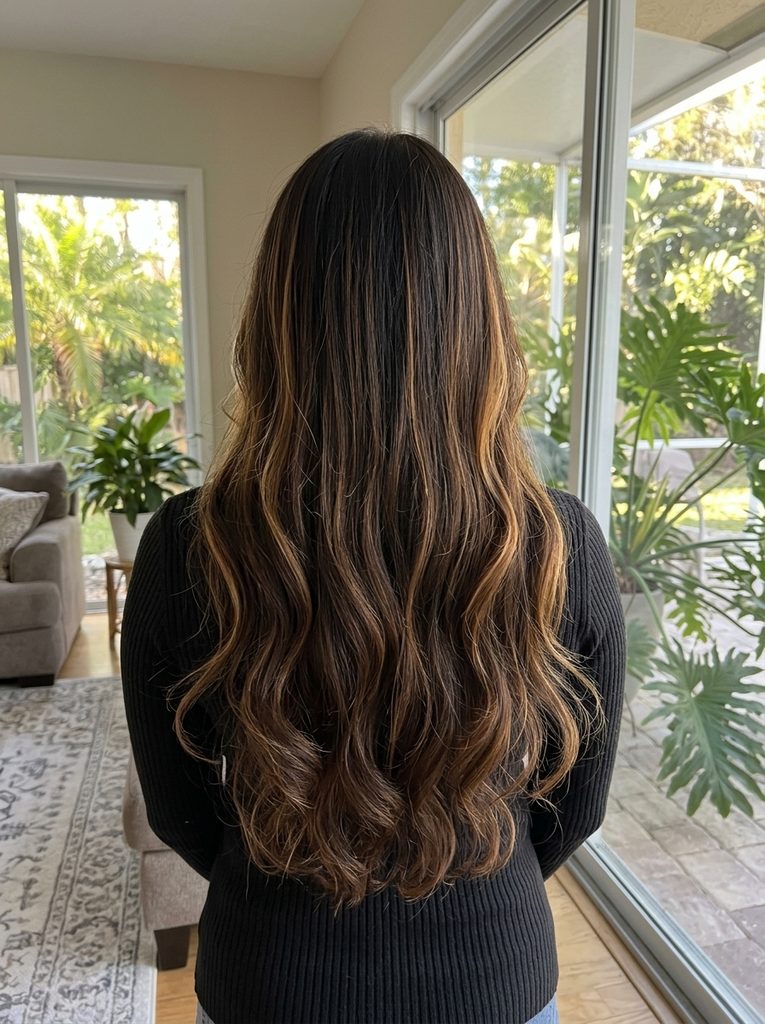
Instead of requesting only “caramel balayage,” describe the visual details that matter to you.
- How much of my dark brown base should stay visible?
- Should the roots remain mostly untouched and dark?
- Do I want subtle, medium, or high contrast?
- Should the caramel begin around the mid-lengths or higher?
- Do I want brighter pieces around the front?
- Should the caramel look deep, classic warm, beige, or honey-toned?
- Do I prefer fine ribbons or larger visible sections?
- How will this placement look with the way I usually wear my hair?
- What maintenance would this specific result require on my current hair?
Bring more than one reference if needed. One photo can show your preferred root depth, another can show the caramel tone, and a third can show the placement you like.
Caramel Balayage Maintenance Considerations
There is no single maintenance schedule that applies to every caramel balayage. The amount of contrast, placement, starting color, previous color work, and desired tone can all affect how the result changes over time.
A deeper root and softer transition may make new growth less visually obvious than brighter color placed very close to the root. However, the lighter sections and overall tone can still change between appointments.
Ask your stylist what upkeep makes sense for the exact result created on your hair rather than assuming one schedule fits every balayage look.
Who Should Consider a More Subtle Caramel Balayage?
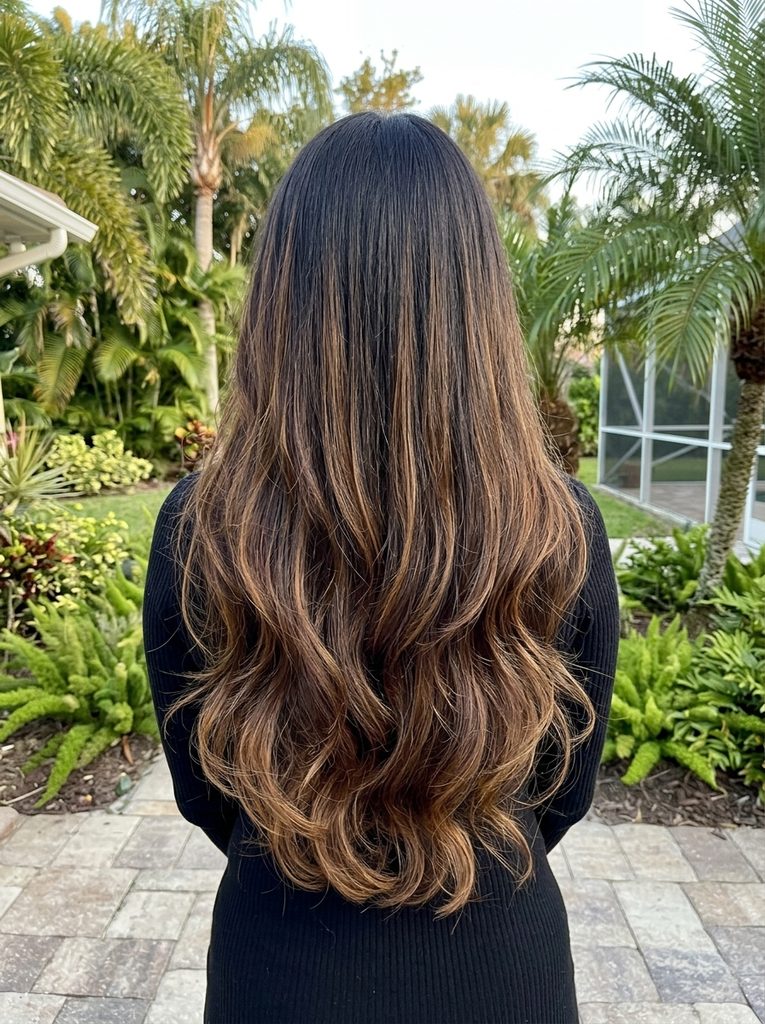
A subtle version may make sense if your priority is keeping the overall hair color visibly brunette.
Look for references with fine caramel ribbons, deeper mocha transitions, chestnut warmth, or brightness concentrated farther down the lengths.
The goal is not to hide the balayage completely. Instead, the lighter pieces work as secondary dimension while the dark brown base stays visually dominant.
Who Might Prefer a Stronger Caramel Contrast?
A stronger contrast works better if you want the balayage to become a major part of the finished style.
Look for brighter face-framing pieces, honey-caramel ribbons, visibly lighter ends, or wider sections against a deep brunette base.
When comparing references, check that you like both the lighter color and the amount of dark hair left between the brighter pieces.
Frequently Asked Questions
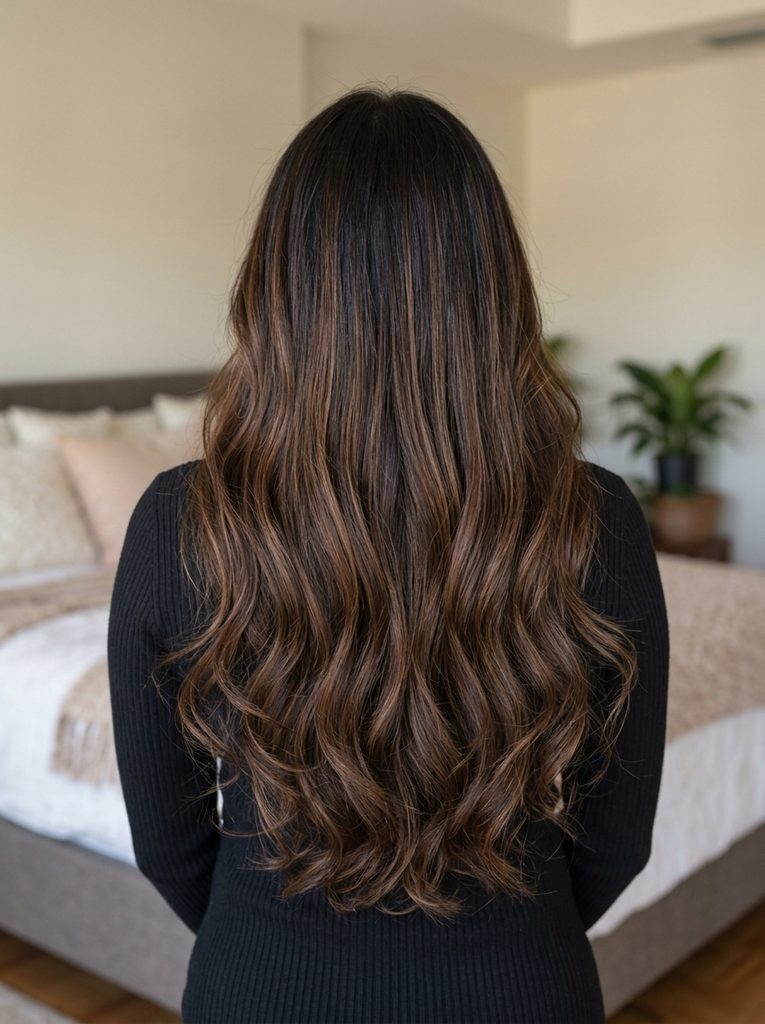
What is caramel balayage on dark brown hair?
It is a brunette color look that combines a dark brown base with caramel-toned pieces blended through selected sections of the hair, often through the mid-lengths, ends, or face-framing areas. Can caramel balayage stay mostly dark brown?
Yes. Fine ribbons, deeper caramel tones, and lower placement can add dimension while allowing most of the hair to remain visibly brunette. What is the most subtle caramel balayage?
Fine mocha-caramel or chestnut-caramel pieces that stay close to the depth of the brunette base usually create a softer visual effect than bright honey or high-contrast ribbons. Can caramel balayage work with dark roots?
Yes. Many brunette balayage references keep the root area deeper and introduce more brightness farther down the lengths, creating a gradual transition. What is the difference between caramel balayage and caramel highlights?
The visual results can overlap, but balayage-style looks often emphasize softer transitions, varied placement, and more root depth, while traditional highlighted looks may appear more structured or evenly distributed. What should I show my stylist?
Bring clear photos showing the brunette base depth, caramel tone, contrast level, placement, and hair texture you like. Point out exactly which details you want to copy rather than relying only on the name of the color.
Final Takeaway
Caramel balayage on dark brown hair can range from a few quiet warm ribbons to bold caramel sections against a deep brunette base.
Start by deciding how much dark brown you want to keep. Then compare the placement, caramel tone, and contrast level in your favorite references.
If you want even more balayage variations beyond caramel, explore our broader brunette balayage ideas guide. If you want caramel inspiration that includes non-balayage highlight placement, see our dark brown hair with caramel highlights guide.
Comments