
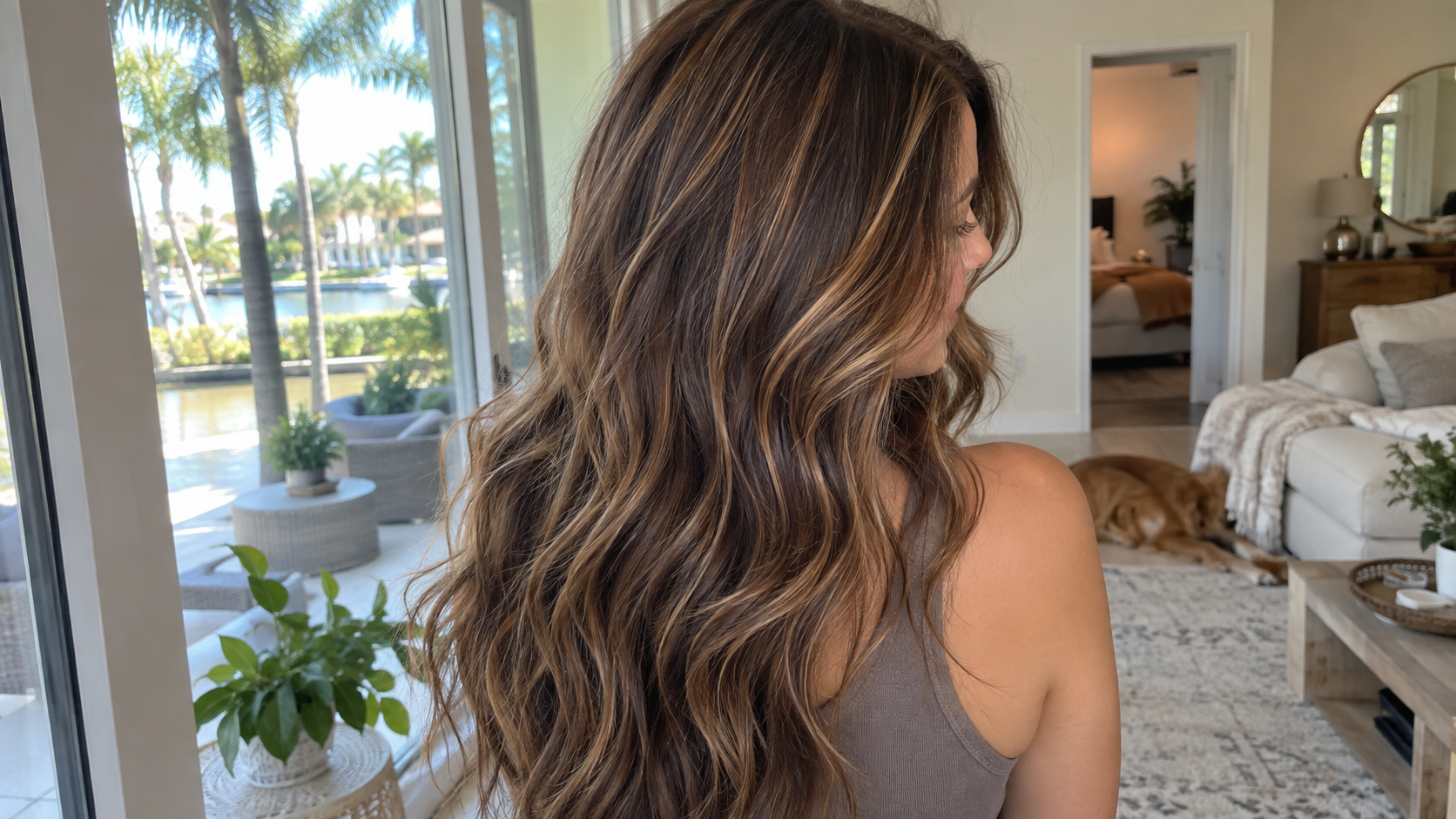
Chocolate brown hair with caramel highlights is a warm, dimensional way to refresh brunette hair without losing the richness of a darker base. The chocolate tone keeps the overall look deep and glossy, while caramel pieces add softness, movement, and light in selected areas.
The final result can look very different depending on the placement. Fine caramel ribbons create subtle dimension, brighter face-framing pieces make the front feel lighter, and a blended balayage can gradually brighten the mid-lengths and ends.
Quick Answer
For a natural-looking result, keep plenty of chocolate brown visible between the caramel highlights. Softer ribbons work well for low contrast, while wider pieces or brighter face-framing highlights create a more noticeable change. The best placement depends on your starting color, hair texture, and how much maintenance you want.
Chocolate Brown Hair With Caramel Highlights: 12 Ideas
1. Soft Face-Framing Caramel Highlights
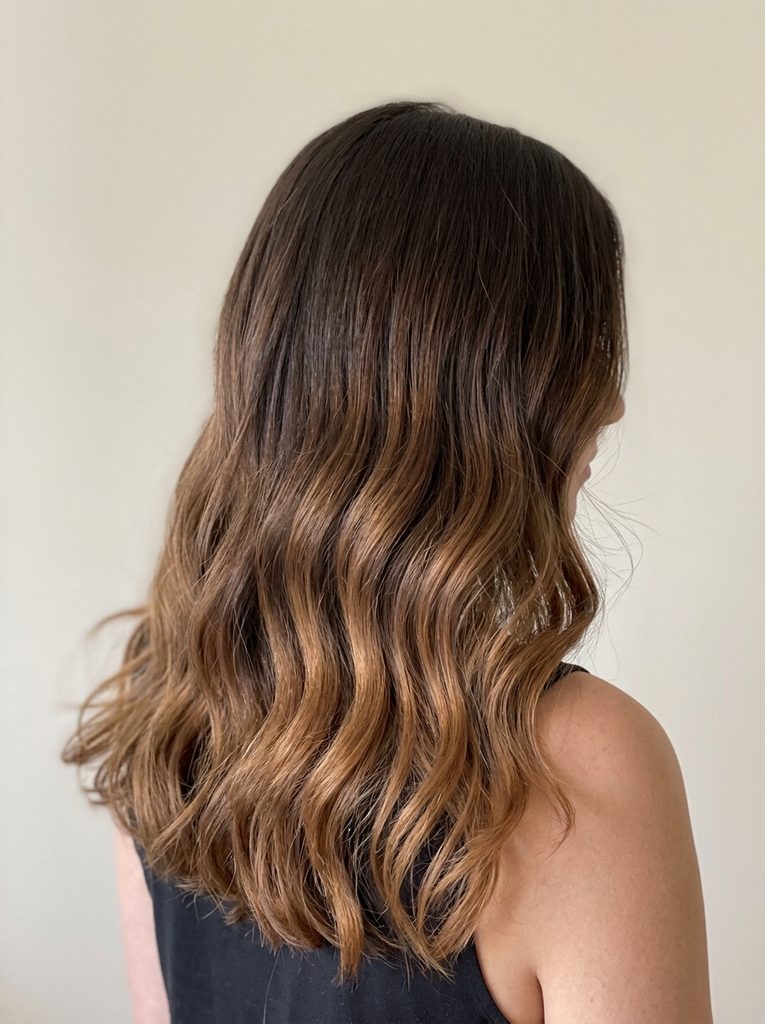
Soft face-framing caramel highlights are a simple way to brighten chocolate brown hair without changing the entire color. The lighter sections stay concentrated around the front, while the crown and most of the lengths remain deep brunette.
This placement works especially well when the caramel is blended gradually instead of starting as a bold, solid section.
Best for: Someone who wants a visible change around the face while keeping an overall brunette look.
Ask your stylist: Keep the front slightly brighter and leave more chocolate brown depth through the back and crown.
2. Fine Caramel Ribbons
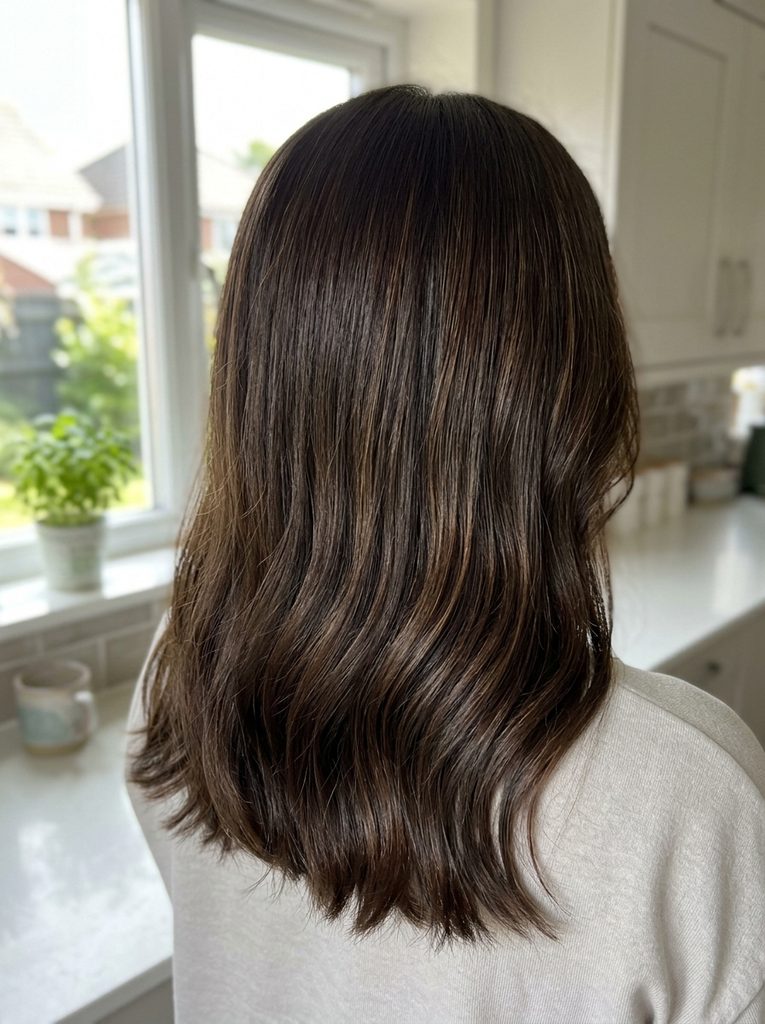
Fine caramel ribbons add warmth without creating a heavily highlighted finish. Narrow sections of caramel are spaced through the chocolate base, leaving enough darker hair between them to create depth.
Soft waves can make these smaller ribbons easier to see because different sections catch the light as the hair moves.
Best for: A subtle, dimensional brunette result.
3. Seamless Caramel Balayage
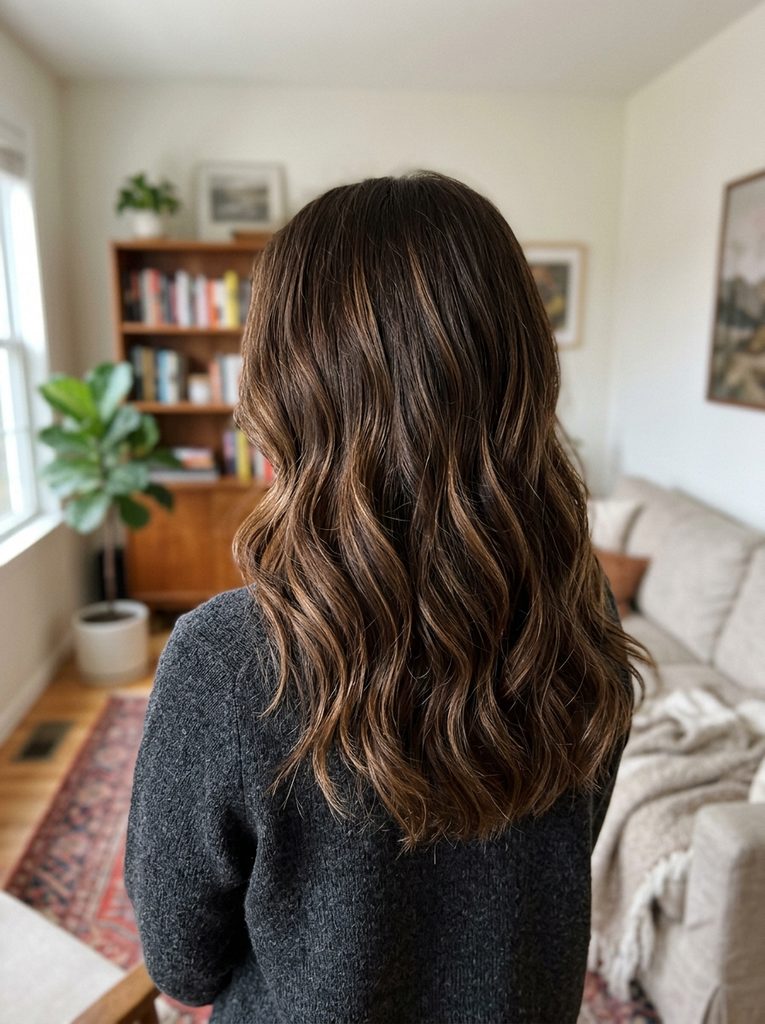
A caramel balayage keeps the root area darker and gradually introduces lighter color through the mid-lengths and ends. The transition should look soft rather than creating a clear line between the chocolate and caramel tones.
This is a good option if you like visible warmth but still want the hair to look naturally rooted.
Ask your stylist: Keep the root rich and blend the caramel gradually through selected sections instead of lightening every strand.
4. Brighter Caramel Face Frame
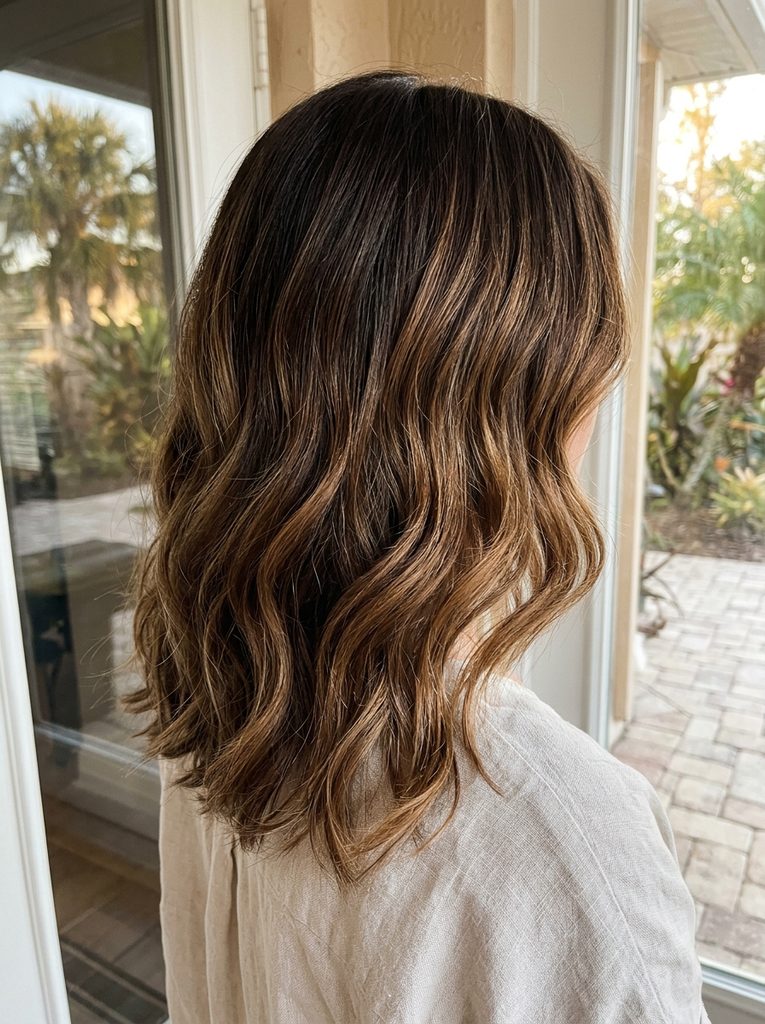
A brighter face frame creates stronger contrast than the softer version. The lightest caramel pieces sit around the front, while the rest of the hair uses deeper caramel or remains chocolate brown.
A few lighter ribbons through the lengths can help connect the front pieces to the rest of the color.
Best for: Someone who wants the most visible brightness around the face without going lighter all over.
5. Subtle Caramel Babylights
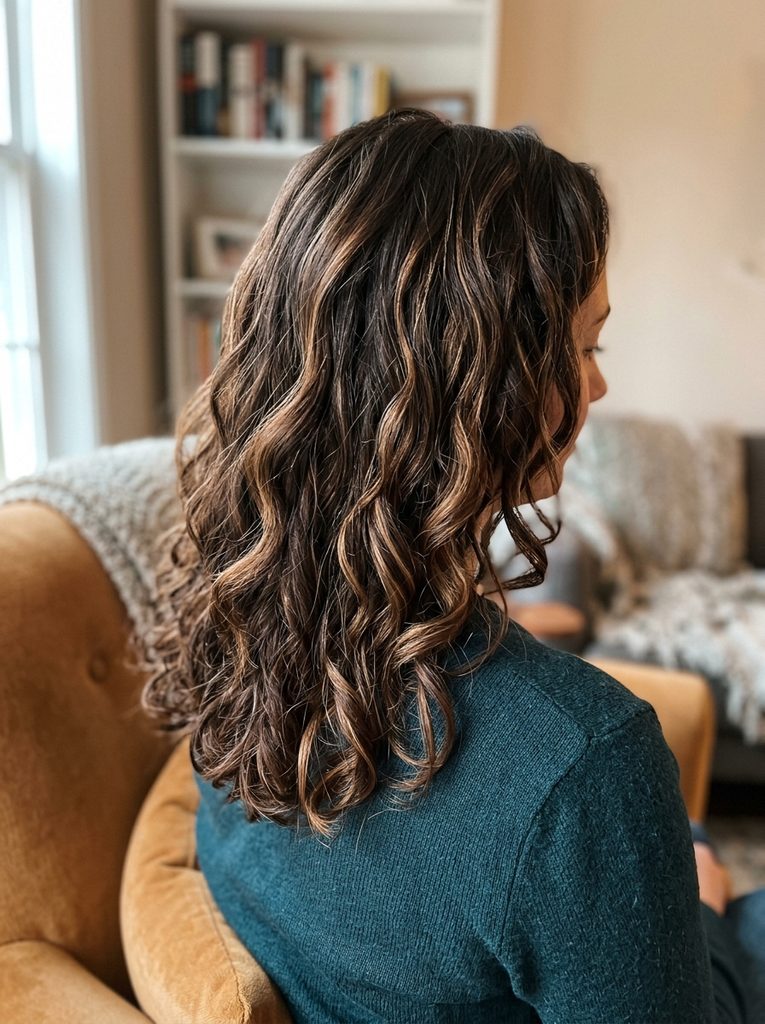
Caramel babylights are very fine pieces of color that create soft variation throughout dark hair. Because the sections are narrow, the chocolate brown base remains the dominant shade.
The effect can be especially subtle when the caramel is only slightly lighter than the natural or colored brunette base.
Best for: Minimal contrast and a soft brunette refresh.
6. Deep Chocolate Roots With Caramel Lengths
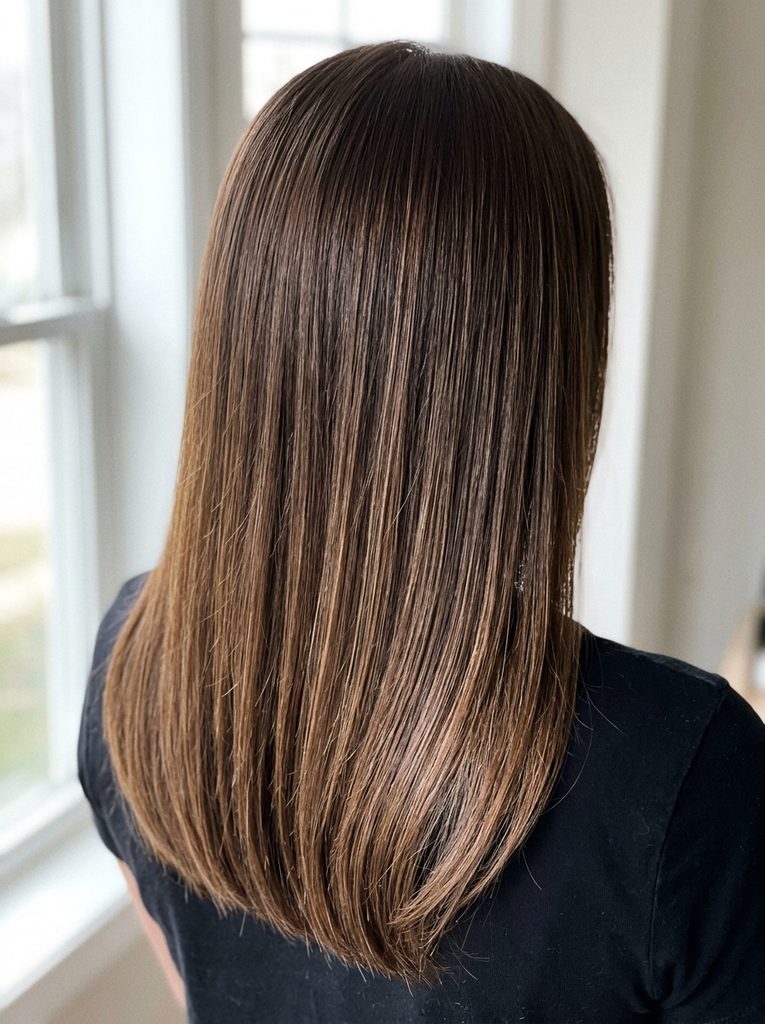
Keeping deep chocolate roots gives the hair a rich foundation while allowing the caramel through the lower sections to stand out. The lighter color can begin around the mid-lengths and become more visible toward the ends.
The most natural versions still include a few darker strands through the lower lengths so the color does not become one flat lighter shade.
Best for: A rooted look with noticeable caramel dimension.
7. Wide Dimensional Caramel Ribbons
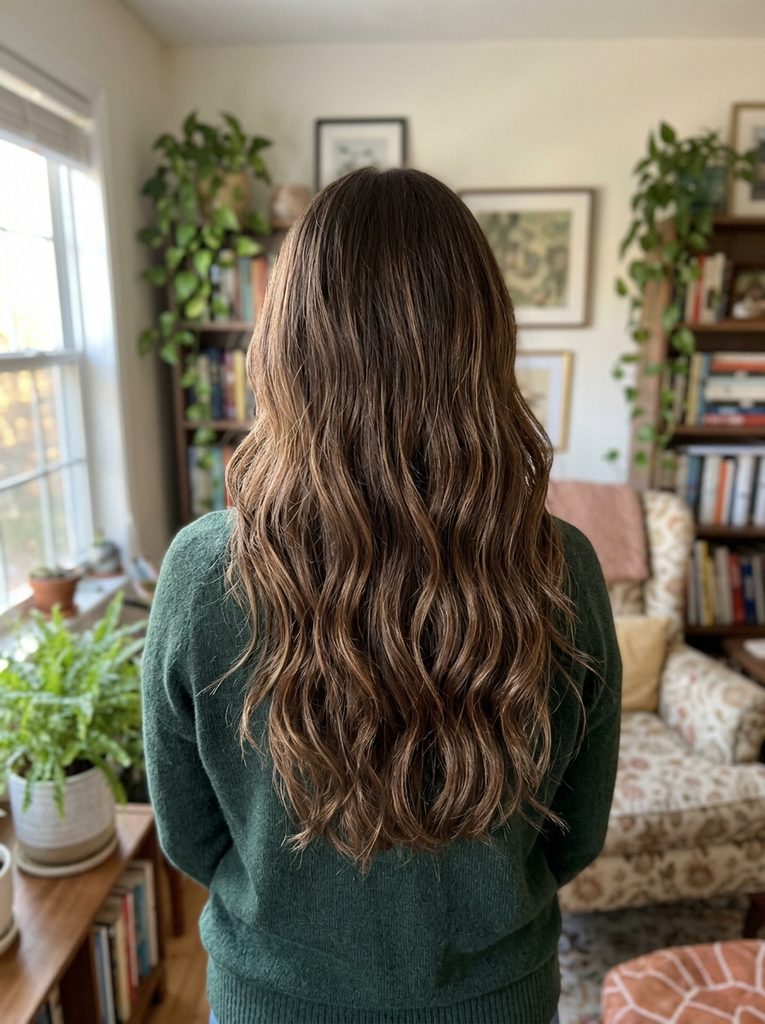
Wider caramel ribbons create a stronger visual contrast against chocolate brown hair. Instead of many tiny highlights, this look uses larger sections of warm color with darker brunette space left between them.
Loose waves can make the different tones easier to see by separating the lighter and darker sections.
Ask your stylist: Keep enough brunette negative space between the caramel ribbons so the highlights remain defined.
8. Soft Chocolate-to-Caramel Color Melt
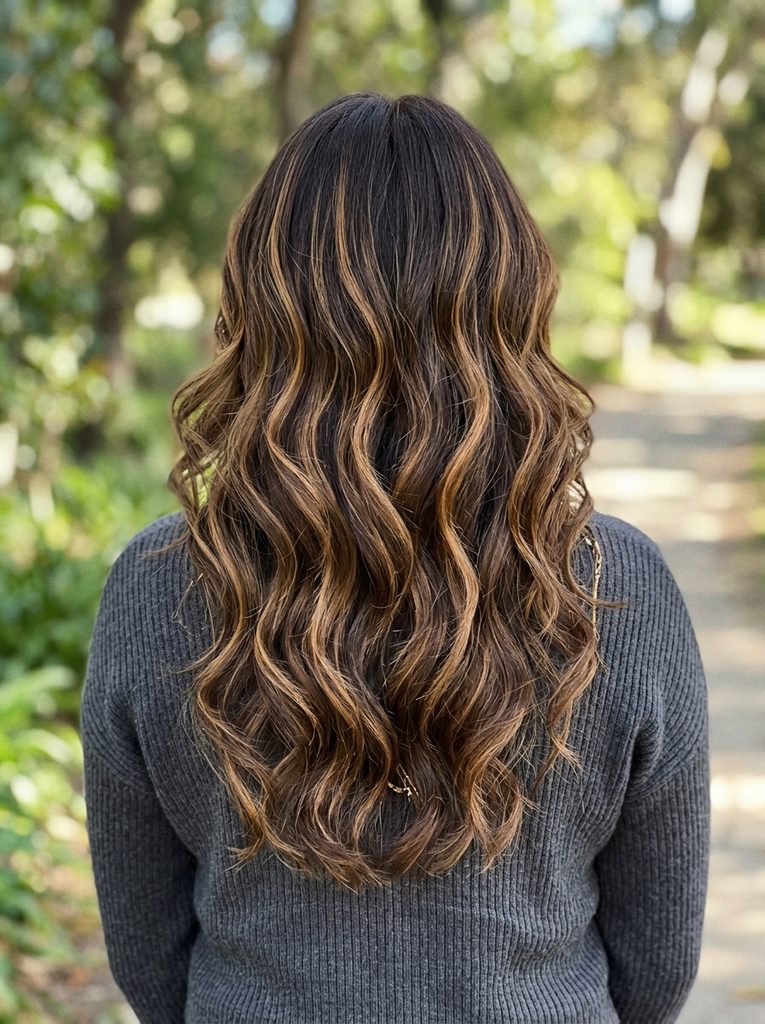
A chocolate-to-caramel color melt focuses on a very gradual transition. The upper hair stays richer and darker, while warmer caramel tones become more noticeable toward the lower lengths.
Unlike high-contrast highlights, the different shades should appear to flow into one another.
Best for: Someone who prefers a blended effect over individually defined highlight ribbons.
9. Chocolate Brown Hair With Warm Caramel Ends
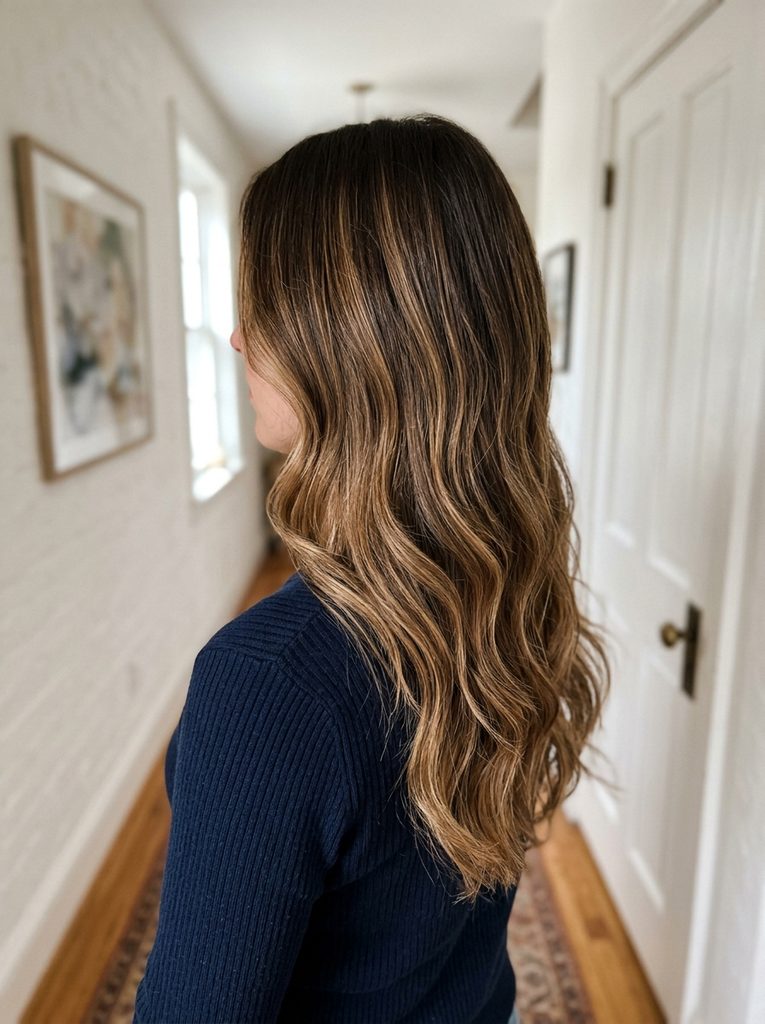
Caramel concentrated mainly through the ends can create a lighter finish without changing much of the upper hair. The crown and upper lengths remain chocolate brown, while the lower sections gradually become warmer.
A few fine caramel pieces higher through the hair can make the transition feel more connected.
Best for: Keeping plenty of dark brunette color while adding warmth to longer hair.
10. Low-Contrast Caramel Highlights
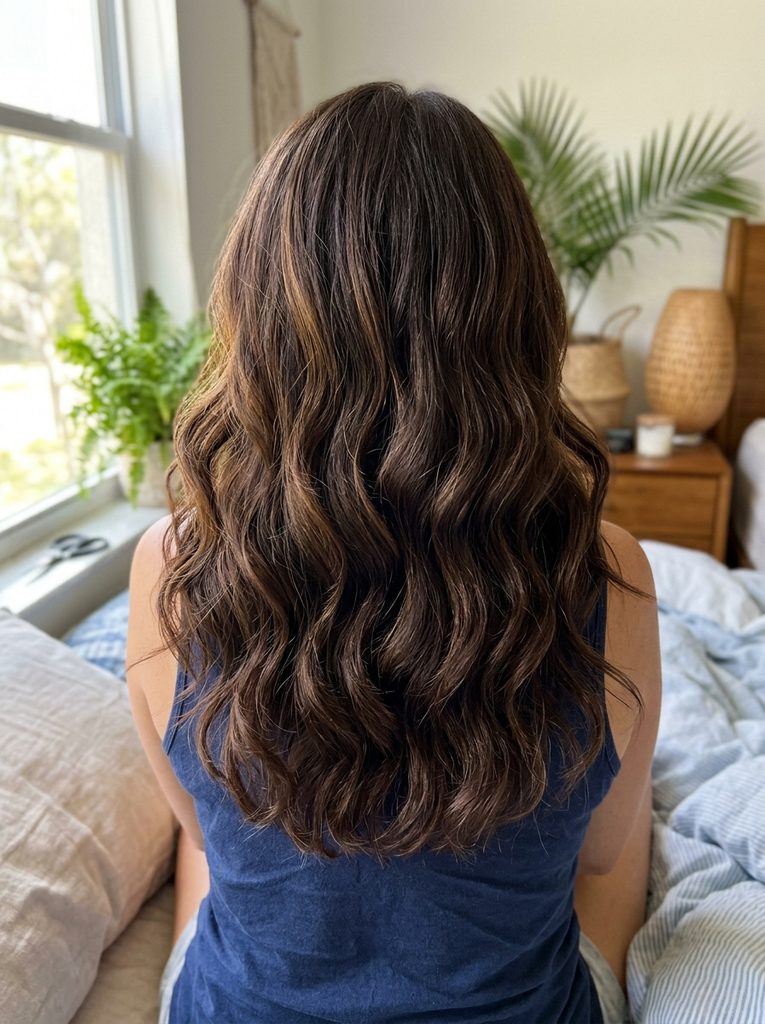
Not every caramel highlight needs to be dramatically lighter. A deeper caramel shade can sit close to a chocolate brown base and create dimension that becomes most noticeable in natural light.
This softer contrast can make the hair look multi-tonal while still reading clearly as brunette.
Best for: A refined, understated color change.
11. Caramel Dimension on Soft Curls
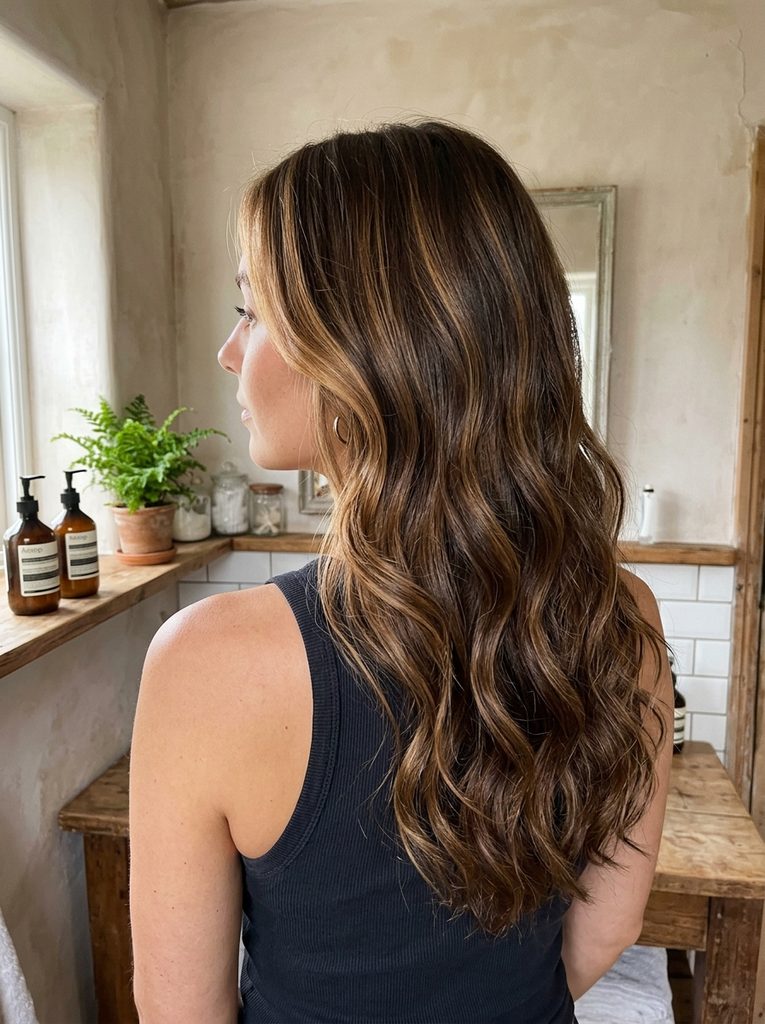
Caramel highlights can help show the shape and movement of soft curls. Instead of lightening every curl, selected sections can be highlighted so lighter and darker tones alternate throughout the hair.
The chocolate brown sections create depth, while the caramel pieces help individual curves and layers stand out.
Best for: Curly or wavy hair where visible dimension is part of the goal.
12. Smooth Caramel Blend on Straighter Hair
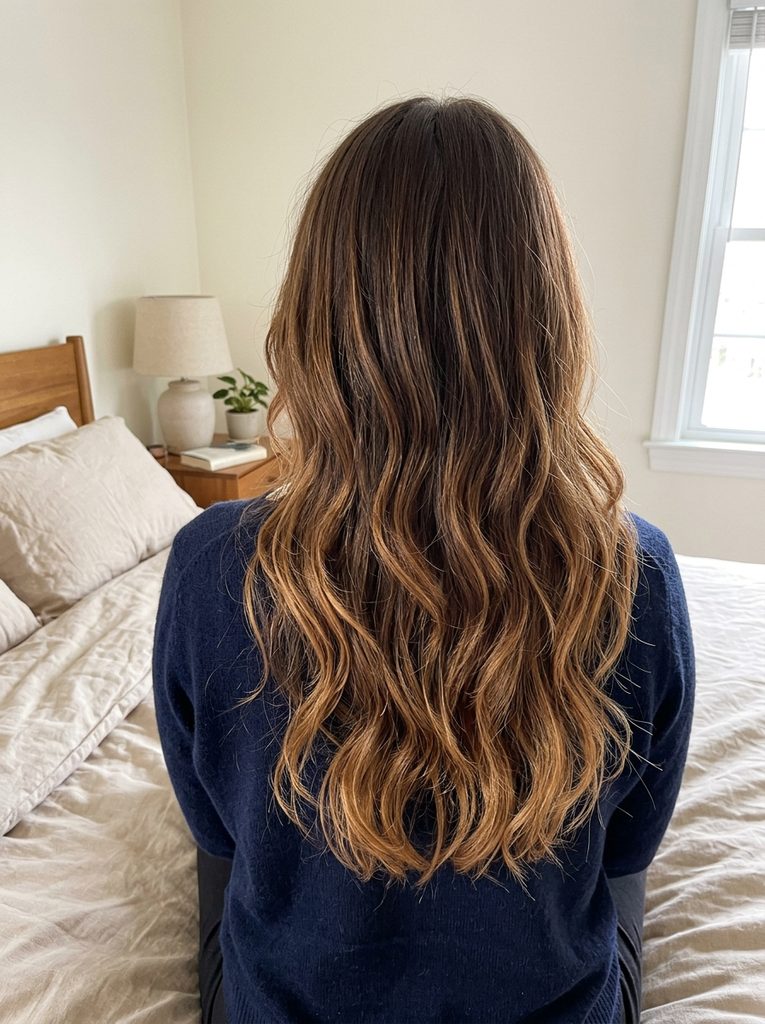
Straighter hair makes the quality of the color blend especially visible. Fine caramel sections should transition smoothly into the chocolate brown base without harsh lines or obvious blocks of color.
A mix of slightly lighter and deeper caramel tones can help the result look more natural than using one identical highlight shade throughout.
Ask your stylist: Focus on soft blending and fine placement if you regularly wear your hair straight.
How to Choose the Right Caramel Highlight Placement
The right placement depends on how much change you want.
- For subtle dimension: Choose babylights, fine ribbons, or low-contrast caramel.
- For brightness around the face: Choose face-framing highlights.
- For a softer grow-out: Keep the root deeper and begin most of the caramel lower through the hair.
- For stronger contrast: Use wider caramel ribbons while keeping dark chocolate sections between them.
- For a gradual transition: Consider balayage or a chocolate-to-caramel melt.
What to Ask Your Stylist
Bring one or more reference images that show the exact type of contrast and placement you like. Shade names alone can mean different things to different people, so visual references are useful when discussing the result.
Talk about how much chocolate brown you want to keep, where you want the brightest pieces, how warm you want the caramel to look, and how often you realistically want to maintain the color.
How to Keep Chocolate Brown and Caramel Hair Looking Fresh
Color-treated hair can lose shine or shift in tone over time. A gentle routine designed for colored hair, regular conditioning, and reasonable heat-tool use can help keep the lengths looking smoother.
If the caramel tone begins looking different from the shade you originally chose, ask your colorist whether a toner or gloss refresh is appropriate for your hair and color formula.
How often you need a salon refresh will depend on the highlight placement, your natural growth, your starting color, and how much contrast you choose.
Frequently Asked Questions
Do caramel highlights work with chocolate brown hair?
Yes. Caramel can create warm contrast against chocolate brown while still keeping the overall color within the brunette family. The effect can range from very subtle ribbons to a noticeably brighter balayage.
What is the difference between caramel highlights and caramel balayage?
Caramel describes the tone of the lighter color. Balayage describes a coloring technique and placement style. A caramel balayage uses caramel-toned lightness with a softer, hand-painted transition through the hair.
Can caramel highlights look natural on dark brown hair?
Yes. Fine sections, a deeper caramel tone, and plenty of untouched brunette between the highlights can create a softer result. Keeping the root darker also helps preserve the natural brunette feel.
Where should caramel highlights start?
That depends on the look you want. Face-framing pieces can begin higher around the front, while balayage or lower ribbons can start farther away from the scalp for a softer rooted effect.
Are chocolate brown hair and caramel highlights low maintenance?
They can be relatively softer-growing when the highlights are blended and the root remains close to the natural or base shade. Brighter pieces starting close to the scalp usually create a more visible grow-out.
Should caramel highlights be chunky or fine?
Fine highlights create softer dimension, while wider ribbons create stronger contrast. Neither is automatically better. The right choice depends on the amount of brightness and definition you want.
Final Thoughts
Chocolate brown hair with caramel highlights can be customized from barely visible warmth to bold dimensional ribbons. The key is keeping enough brunette depth to make the caramel placement noticeable without losing the richness of the chocolate base.
Before your salon appointment, save the specific look that matches your preferred contrast, root depth, highlight width, and placement. A clear visual reference makes it much easier to explain the result you want.
Comments