
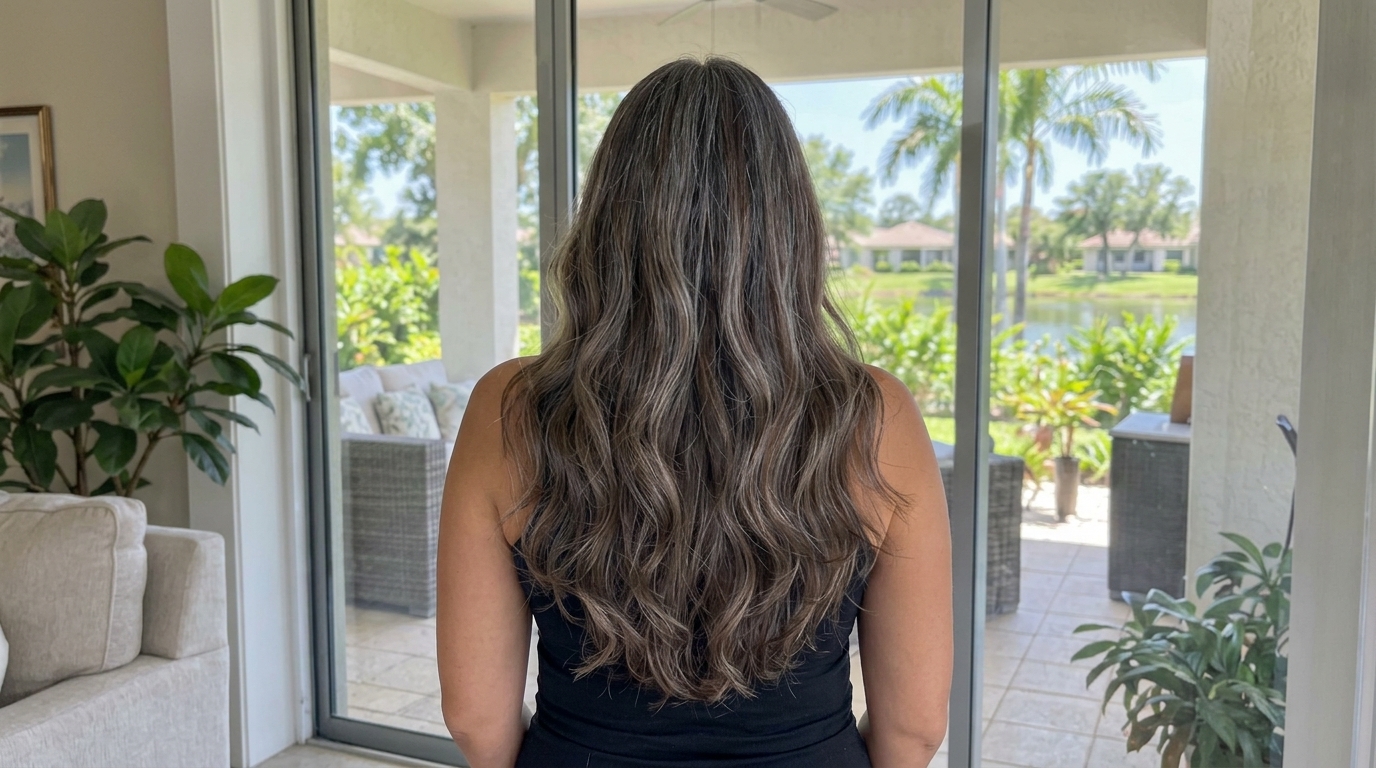
Brown hair with gray blending can keep the richness of brunette hair while allowing natural gray or silver strands to become part of the overall color instead of trying to make every section look identical.
Quick answer: Gray blending on brown hair usually combines brunette depth with natural gray, silver, ash-brown, mushroom-brown, or other muted tones so the contrast between brown and gray feels softer. The result can stay mostly brunette, look more salt-and-pepper, or include visible silver dimension depending on how much gray you want to keep and where it appears.
The 17 ideas below show different ways brown and gray can work together. Compare the amount of brunette, visibility of the silver strands, placement around the hairline and face, overall contrast, and your natural texture before choosing a reference for your stylist.
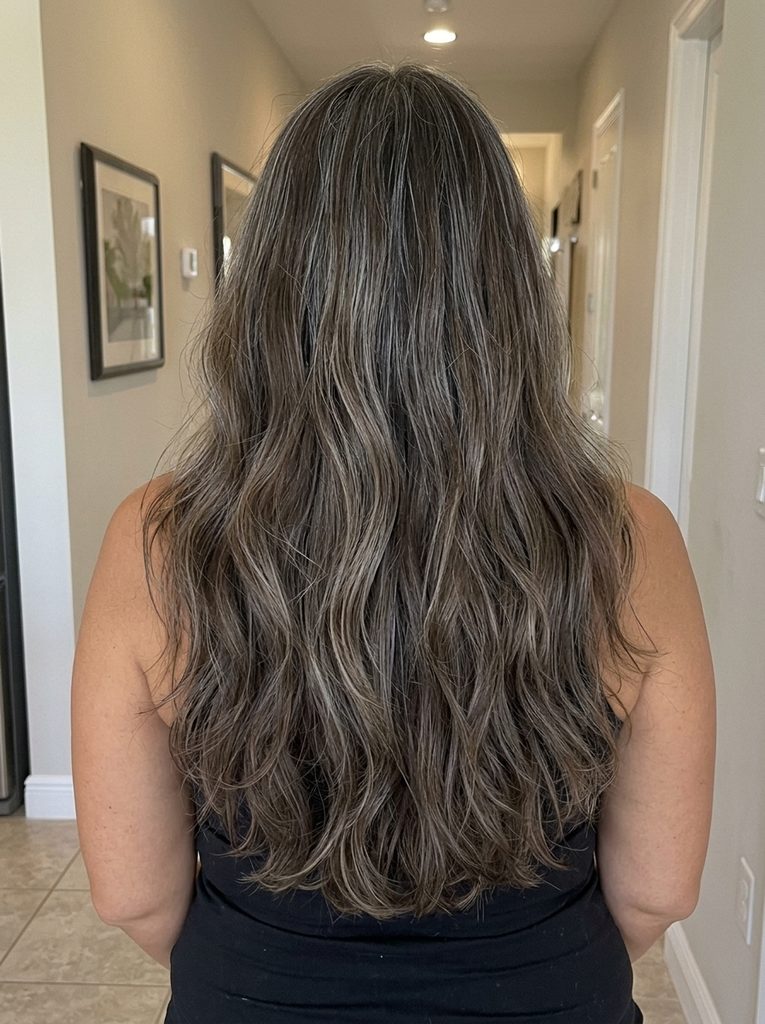
17 Brown Hair with Gray Blending Ideas
Gray blending does not have to look one specific way. Some people want only a few silver strands to remain visible, while others prefer a stronger salt-and-pepper or dimensional brunette-and-gray effect.
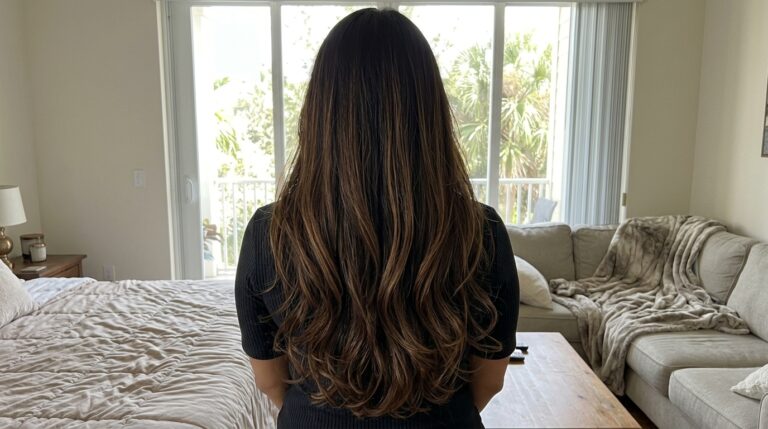
1. Natural Brown Hair With Soft Gray Blending
This look keeps the majority of the hair medium-to-deep brown while allowing fine natural gray strands to remain visible throughout the lengths.
The silver pieces are scattered rather than grouped into obvious sections, so the result feels naturally multi-tonal instead of heavily highlighted.
Stylist reference: Ask for brunette depth with softly distributed gray or silver strands and low overall contrast.
2. Dark Brown Hair With Fine Silver Strands
Fine silver strands create more noticeable contrast against a dark brown base while still leaving brunette as the dominant color.
The lighter pieces can remain narrow and irregular rather than forming a repeated highlight pattern.
Stylist reference: Ask for a deep brown base with fine silver dimension that looks scattered rather than striped.
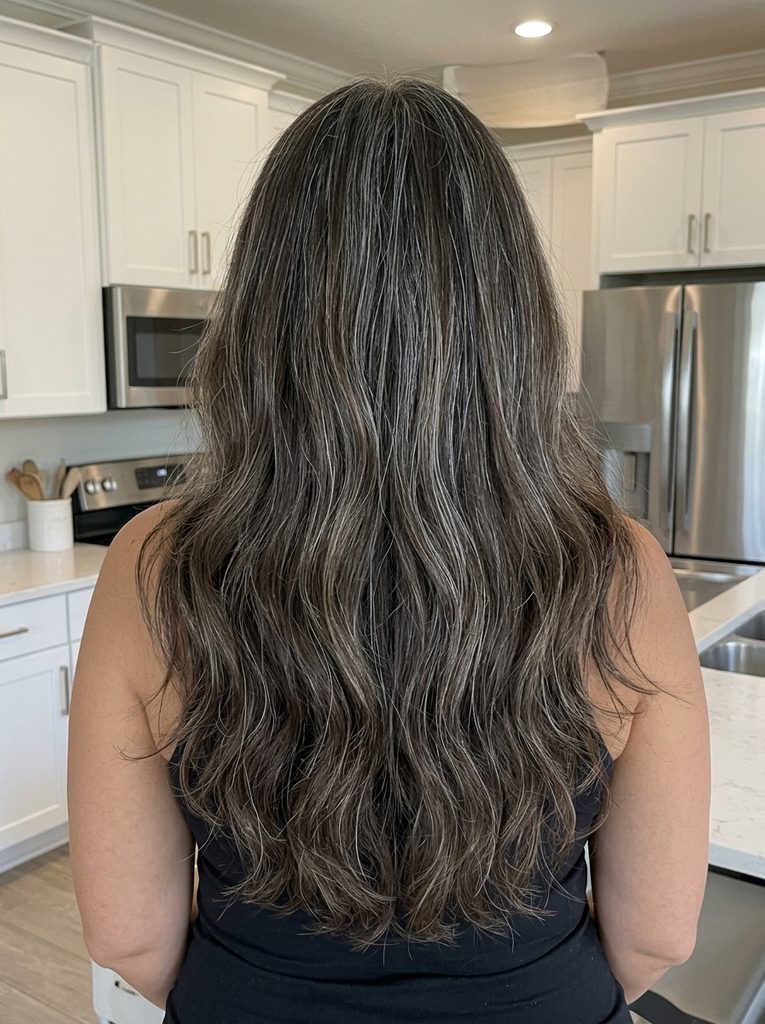
3. Ash Brown Gray Blend
Ash brown can visually connect cooler brown sections with natural gray strands. The muted brunette tone helps the silver feel more integrated into the overall color.
The goal is still to keep the hair visibly brown, not to turn the entire result gray.
Stylist reference: Ask for muted ash-brown brunette with softly integrated natural gray dimension.
4. Mushroom Brown With Gray Dimension
Mushroom brown combines muted brown and taupe-like tones that can sit naturally beside silver or gray strands.
The result feels softer and more neutral than warm chocolate or caramel brunette hair.
Stylist reference: Ask for a mushroom-brown brunette base with visible but softly blended silver dimension.
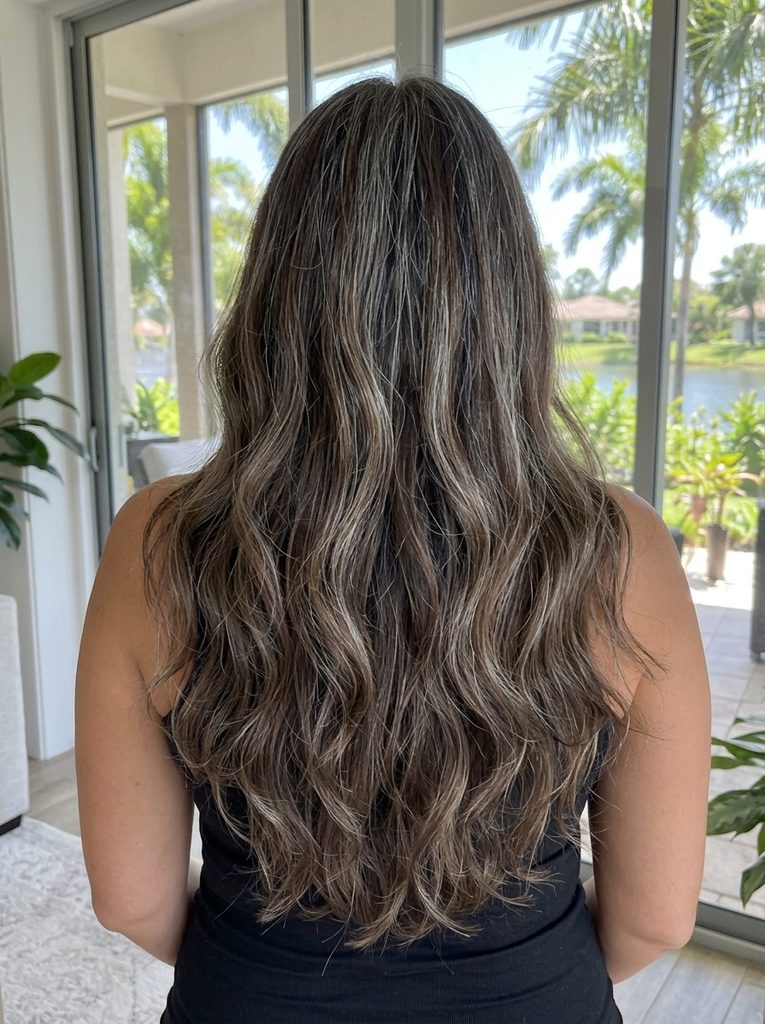
5. Mocha Brown With Cool Gray Threads
Mocha brown gives the hair rich coffee-brown depth while fine gray strands create cooler contrast through selected areas.
Keeping the gray pieces narrow helps the overall result remain brunette first.
Stylist reference: Ask for deep mocha brunette with fine cool silver-gray strands distributed naturally through the hair.
6. Chocolate Brown With Soft Silver Blending
A chocolate-brown base can still work with gray blending when the warmth stays controlled and the silver pieces are allowed to remain visible.
The combination creates a richer brown-and-gray result rather than an entirely cool-toned look.
Stylist reference: Ask for chocolate brunette with soft silver blending while preserving natural variation between brown and gray.
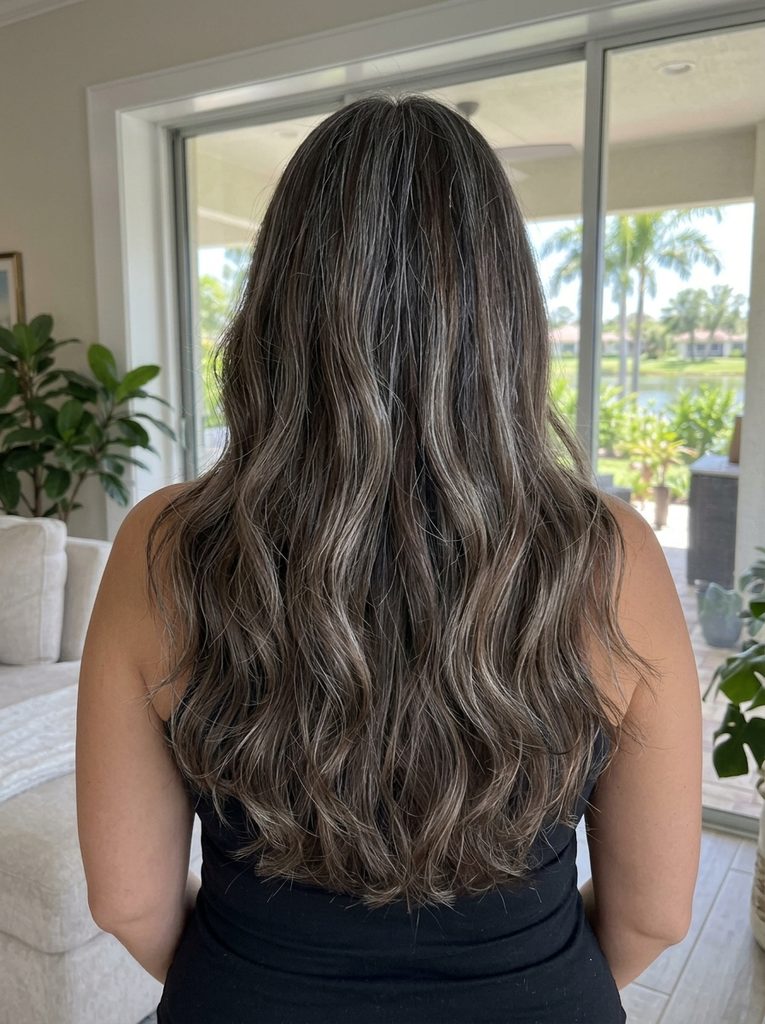
7. Gray Blending Around the Hairline
For some people, natural gray is most visible around the hairline. Instead of hiding that area completely, the surrounding brown can be blended so the transition feels softer.
This creates a different visual effect from all-over gray blending because the silver remains more concentrated near the front and edges.
Stylist reference: Show your stylist how much natural gray you want visible around the hairline and how softly you want it connected to the brunette lengths.
8. Brown Hair With Silver Face-Framing Pieces
Silver face-framing pieces make the gray more intentional and visible while the rest of the hair remains deeper brown.
The front sections can connect to smaller silver strands through the lengths so they do not feel isolated from the rest of the color.
Stylist reference: Ask for visible silver dimension around the front with softer gray blending through the brunette lengths.
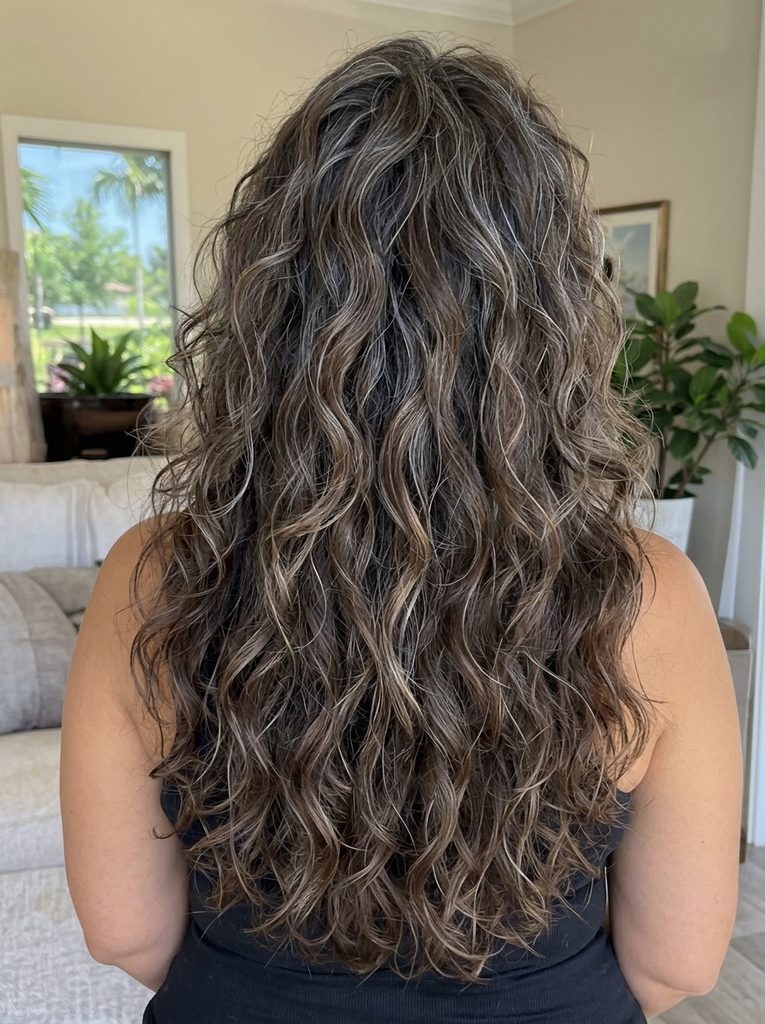
9. Rooted Brown Hair With Gray Through the Lengths
This variation keeps more brunette depth near the crown while gray and silver dimension becomes easier to see through the mid-lengths and ends.
The change should remain gradual rather than creating an obvious line between the root area and the rest of the hair.
Stylist reference: Ask for deeper brunette near the crown with softly increasing silver-gray dimension through selected lengths.
10. Brunette Balayage With Gray Blending
A softly dimensional brunette can combine deeper brown sections with muted lighter brown and silver-gray pieces through selected lengths.
The most natural-looking references preserve plenty of brunette rather than making every section equally light.
Stylist reference: Ask for brunette dimension that visually connects the darker brown base with existing gray strands instead of covering all of them.
11. Fine Silver Ribbons Through Brown Hair
Fine silver ribbons create more structure than naturally scattered gray strands but can still stay subtle when they are narrow and irregular.
Leaving generous brown sections between them prevents the finished color from becoming predominantly silver.
Stylist reference: Ask for fine silver ribbons with plenty of brunette separation and no chunky stripe pattern.
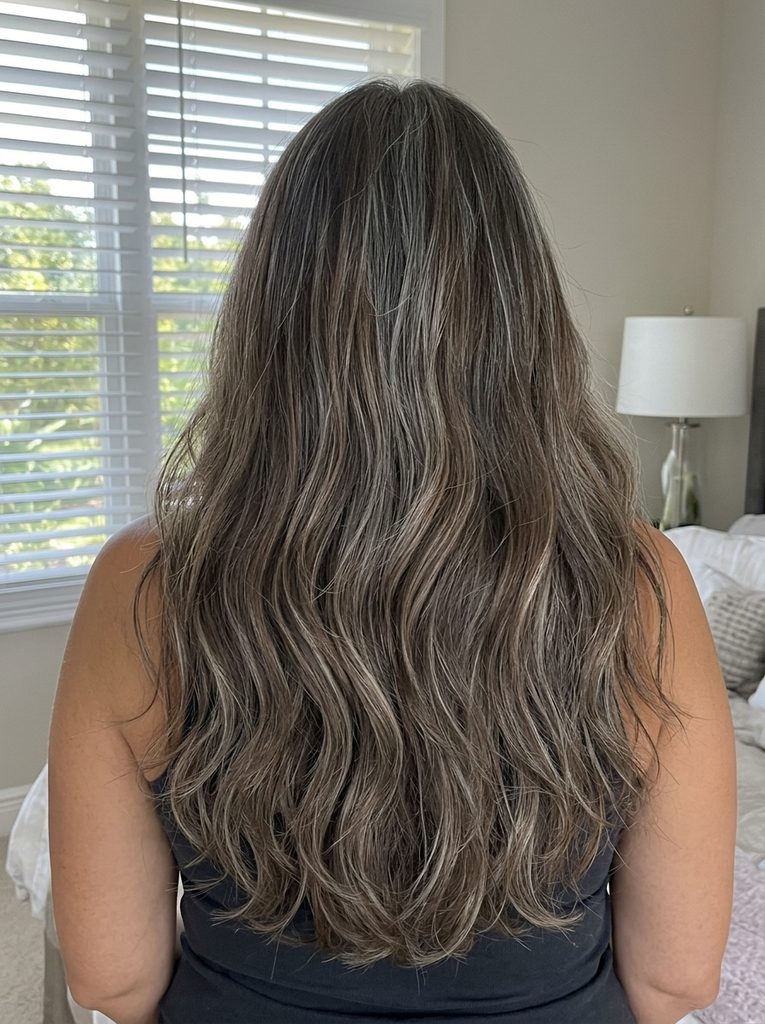
12. Salt-and-Pepper Brown Hair
A salt-and-pepper brunette allows both dark brown and gray strands to remain clearly visible throughout the hair.
The contrast is stronger than a very subtle gray blend, but neither color needs to completely overpower the other.
Stylist reference: Ask for a balanced brown-and-gray result where natural silver remains an intentional part of the overall look.
13. Multi-Tonal Brown and Gray Blend
This look combines several related tones instead of only dark brown and bright silver.
Deep brunette, ash brown, mushroom brown, smoky brown, and soft gray can create a gradual multi-tonal effect with fewer sharp transitions.
Stylist reference: Ask for several closely related brunette and muted gray tones rather than one dark base and one bright highlight color.
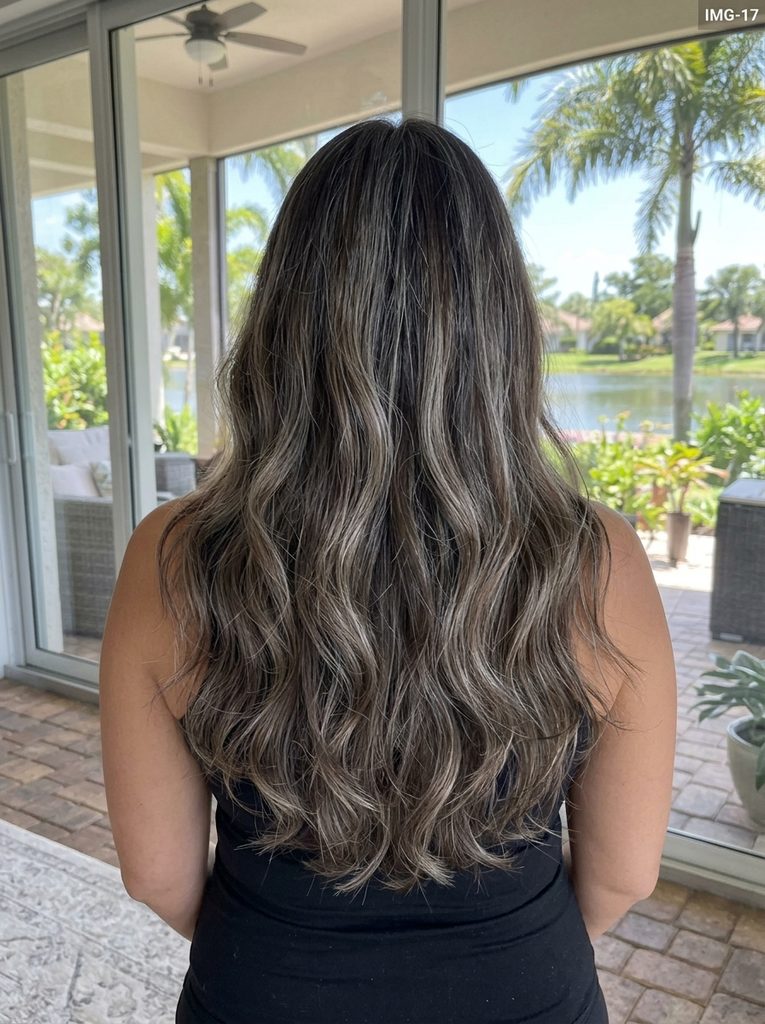
14. Straight Brown Hair With Gray Blending
Straight hair makes individual gray strands and color transitions easier to see because the hair is not being broken up by waves or curls.
Fine, irregular silver pieces generally look more natural in this texture than perfectly repeated bands.
Stylist reference: Bring a straight-hair reference if this is how you normally wear your hair so you can judge the gray placement clearly.
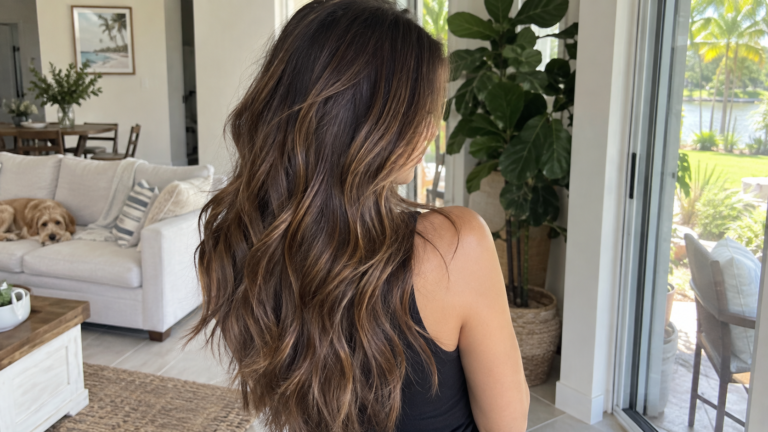
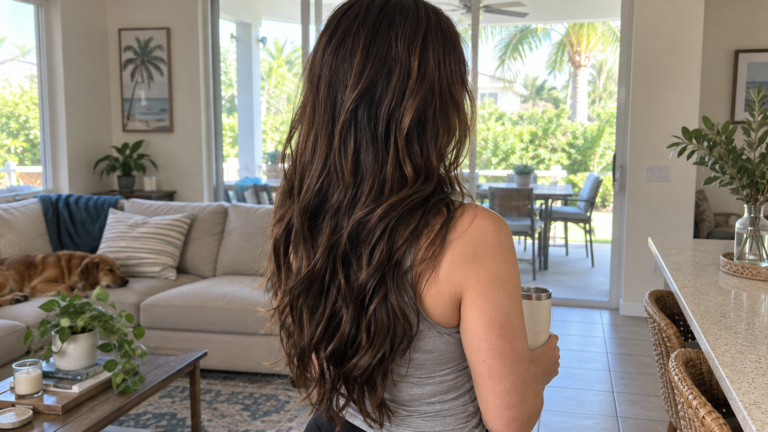
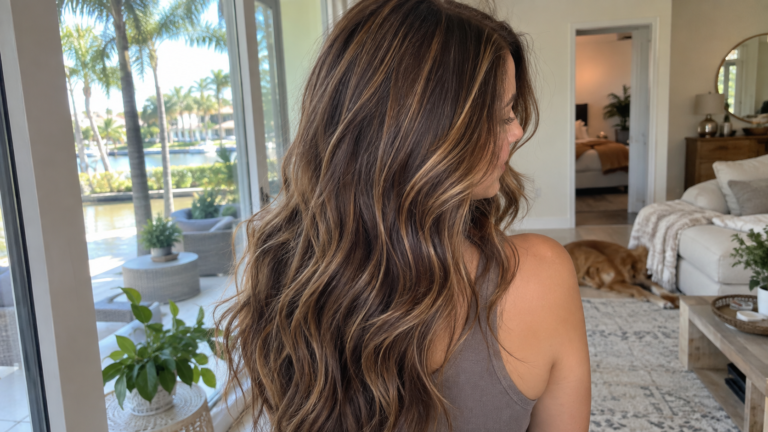
15. Brown Hair With Gray Blending on Soft Waves
Soft waves create natural areas of shadow and reflection, making brown and silver tones appear more dimensional.
Some sections may look mostly brunette while the bends of the hair reveal more visible gray or muted ash-brown dimension.
Stylist reference: Choose a softly waved reference if you want to see how the brown-and-gray mix behaves with movement.
16. Brown and Gray Blending on Naturally Curly Hair
Natural curls separate brown and gray tones into smaller areas, which can create dimension without a uniform highlight pattern.
Some curls can remain deep brunette while others show silver, ash-brown, or mixed gray dimension.
Stylist reference: Bring a reference with a curl pattern similar to yours and point out how much natural gray you want visible through individual curls.
17. Layered Brown Hair With Silver Dimensional Ends
Layers create natural areas for silver and muted brown dimension to become more visible while the crown stays deeper.
The gray does not need to appear only at the ends, but following selected layers can give the brown-and-silver combination more movement.
Stylist reference: Ask for brunette depth through the upper hair with soft silver and muted-brown dimension following selected layers.
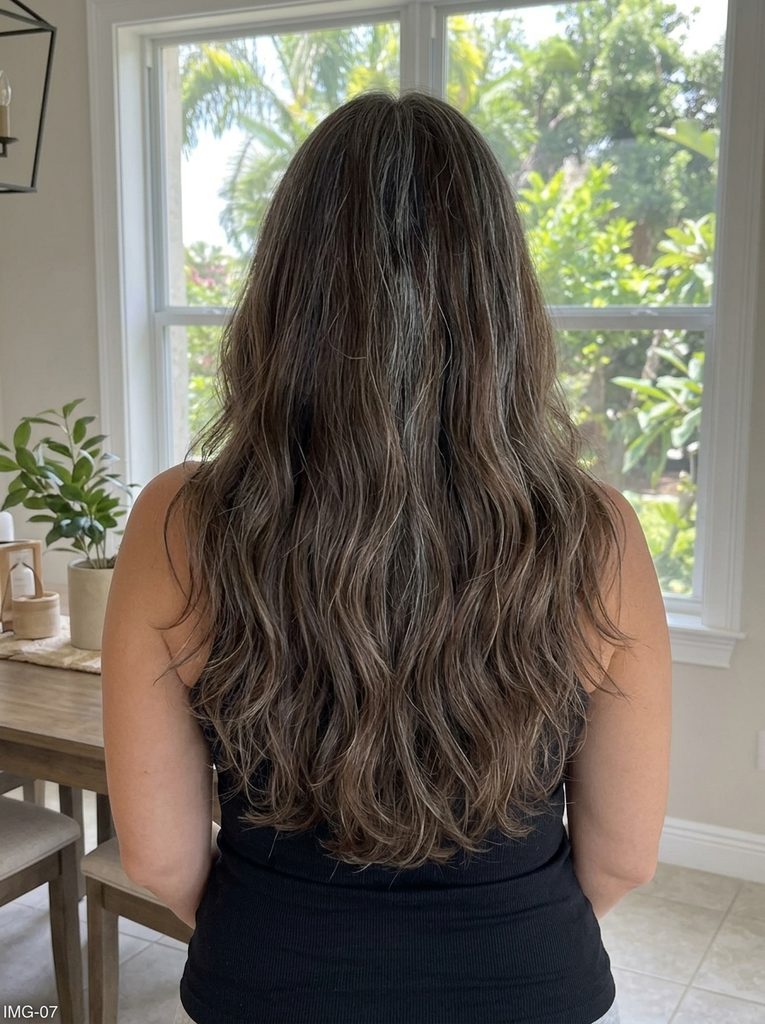
Brown Hair With Gray Blending at a Glance
| Gray Blending Look | Brown Depth | Gray Visibility | Contrast | Overall Effect |
|---|---|---|---|---|
| Soft Natural Blend | Medium–Deep | Low | Low | Natural and subtle |
| Dark Brown + Silver | Deep | Medium | Medium | Defined dimension |
| Ash Brown Blend | Medium–Deep | Low–Medium | Low | Muted brunette |
| Mushroom Brown Blend | Medium | Medium | Low | Soft and neutral |
| Mocha + Gray | Deep | Low–Medium | Medium | Rich and dimensional |
| Hairline Blend | Medium–Deep | Focused | Varies | Front-focused |
| Silver Face Frame | Deep | High at front | Medium–High | Visible silver accent |
| Rooted Gray Blend | Deep at crown | Medium through lengths | Low–Medium | Gradual transition |
| Fine Silver Ribbons | Deep | Medium | Medium | Defined but soft |
| Salt-and-Pepper Brown | Medium–Deep | High | Medium–High | Balanced brown + gray |
| Multi-Tonal Blend | Mixed | Medium | Low | Softly dimensional |
What Is Gray Blending on Brown Hair?
Gray blending is a visual approach that allows some natural gray or silver hair to remain visible while connecting it more softly to the surrounding brunette color.
Instead of making every strand one uniform brown, a blended result can use different brown, ash, mushroom, smoky, silver, or gray tones so the contrast feels more gradual.
The exact salon approach can vary significantly depending on your natural gray pattern, existing color, starting depth, and the result you want, so a reference image is more useful than relying on the term alone.
Gray Blending vs. Full Gray Coverage
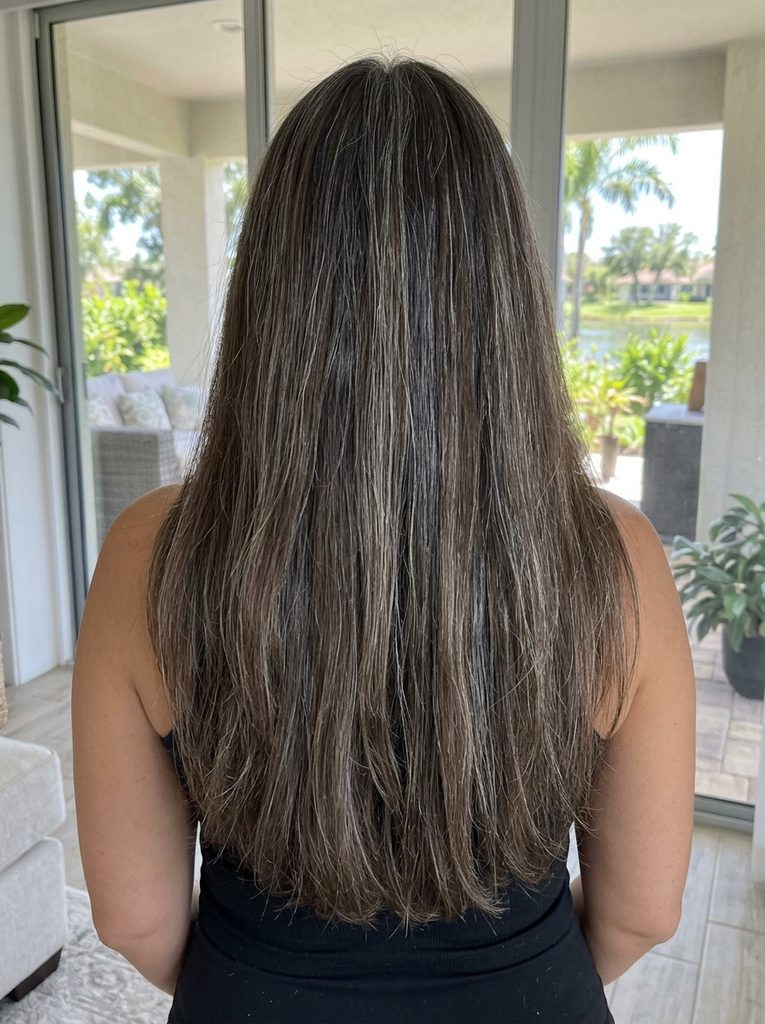
Gray blending and full gray coverage have different visual goals.
Gray blending keeps at least some gray or silver visible and works it into the overall brunette color.
Full coverage aims for a more uniform appearance where the visible gray is largely matched to the surrounding color.
Neither direction is automatically better. The useful question is whether you want your gray to remain part of the finished look or whether you prefer a more uniform brunette result.
How Much Gray Should Stay Visible?
There is no correct amount. A subtle blend may leave only fine silver strands visible, while a stronger salt-and-pepper look can allow gray to become one of the main visual tones.
Look at your reference photos and decide whether the silver is a small accent, a noticeable secondary color, or an equally important part of the brunette-and-gray mix.
Cool Brown vs. Warm Brown With Gray Blending
Cooler brunette shades such as ash brown, mushroom brown, smoky brown, and muted mocha can visually connect with gray because they reduce strong golden or reddish warmth.
Warmer chocolate or natural brown can also be blended with gray, but the contrast between warm brown and cool silver may be more noticeable.
Choose based on the finished color you like rather than assuming gray blending has to be completely cool-toned.
IMAGE: brown-hair-with-gray-blending-09.webp
Gray Blending Around the Hairline and Face
Gray does not always appear evenly across the head. Some people have more visible silver near the hairline or front sections than through the back.
If that matches your natural pattern, save references that show front-focused gray blending rather than only all-over silver dimension.
You can also decide whether you want those front strands to remain clearly visible or connected more softly to the surrounding brown.
Subtle Gray Blending vs. High-Contrast Silver
A subtle blend uses gray and brown tones that sit closer together visually. Ash brown, mushroom brown, smoky brown, and muted silver can create softer transitions.
A higher-contrast look keeps a darker brunette base and allows brighter silver strands or face-framing sections to stand out more clearly.
The contrast level is one of the most important details to point out when showing a reference to your stylist.
How to Choose a Brown Hair With Gray Blending Look
Start with how much brunette you want to keep. Decide whether the finished result should still look mostly brown or whether you want the silver to become more prominent.
Next, look at where your gray naturally appears. Hairline-focused gray, scattered strands, larger silver sections, and an even salt-and-pepper pattern can all need different visual planning.
Then choose the contrast level. Fine muted silver creates a softer blend, while brighter silver against deep brown produces a more defined result.
Finally, compare reference photos with a hair texture similar to yours. Straight, wavy, and curly hair can display the same brown-and-gray mix differently.
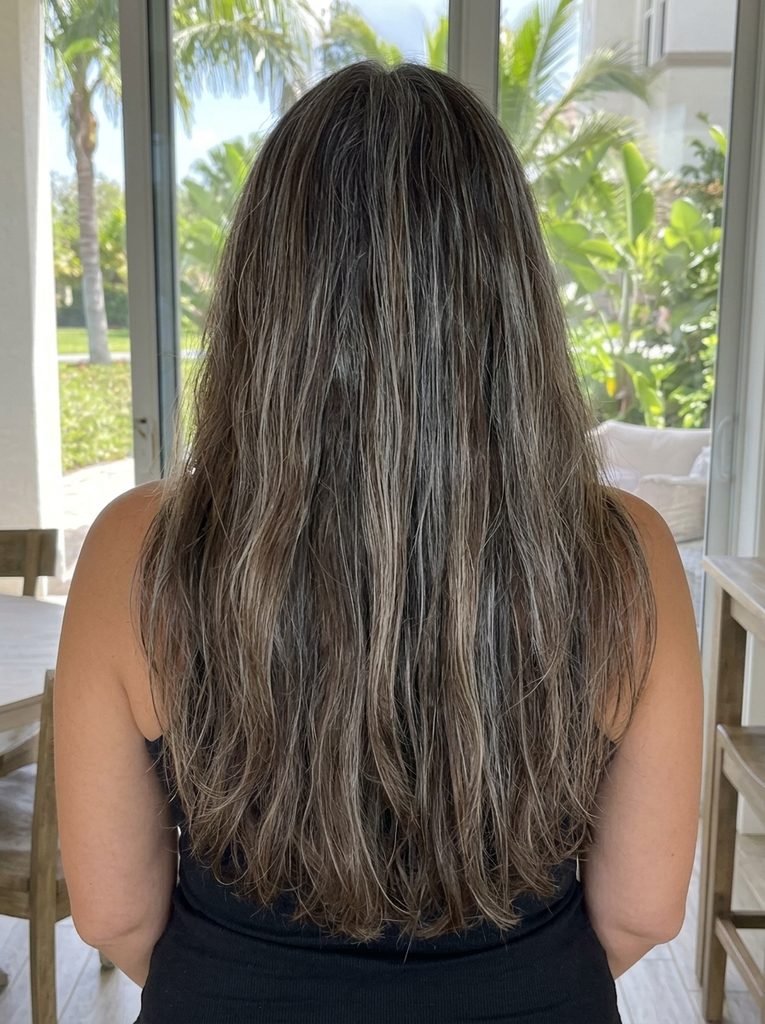
What to Ask Your Stylist About Gray Blending
Instead of asking only for “gray blending,” explain what you want to keep visible and what you want to soften.
- How much of my natural gray do I want to keep visible?
- Should the finished look stay mostly brunette or show more silver?
- Where is my natural gray most concentrated?
- Do I want the hairline gray to remain noticeable?
- Would ash, mushroom, mocha, or another brunette direction fit the reference I like?
- Do I want fine silver strands or more defined silver sections?
- How much contrast do I want between the brown and gray?
- How will the blend look with my normal straight, wavy, or curly texture?
- How could my current color or previous color work affect the target result?
- What upkeep would this specific blend require on my hair?
Two or three reference photos can help. One can show how much gray you want visible, another the brunette tone, and another the placement or contrast you prefer.
Brown Hair With Gray Blending Maintenance Considerations
There is no universal maintenance schedule for brown hair with gray blending.
A subtle ash-brown blend, a darker brunette with silver ribbons, and a stronger salt-and-pepper result may all change differently over time. Your natural gray pattern, previous color work, amount of contrast, and exact salon service also matter.
Ask your stylist for care and refresh guidance based on the actual color created on your hair rather than following one fixed timeline.
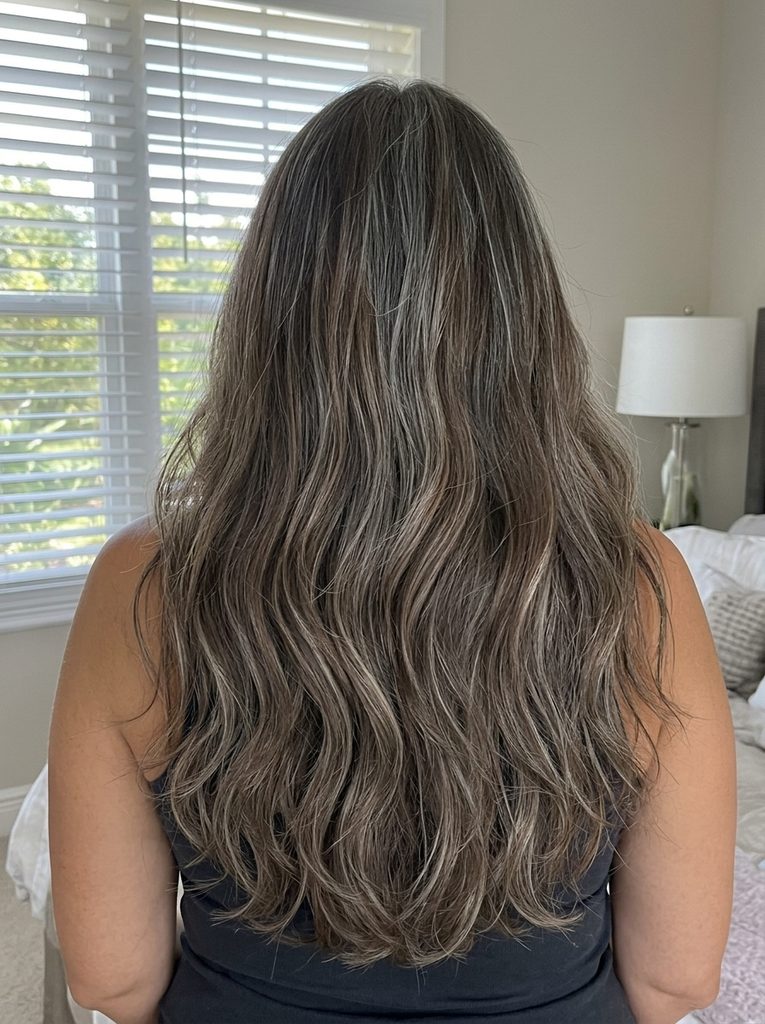
Frequently Asked Questions About Brown Hair With Gray Blending
What is gray blending on brown hair?
Gray blending keeps some natural gray or silver visible while connecting it more softly to the surrounding brown hair using compatible brunette and muted tones.
Does gray blending completely cover gray hair?
Not necessarily. Gray blending usually allows at least some gray or silver to remain visible rather than making every strand one uniform brunette shade.
Can dark brown hair have gray blending?
Yes. Dark brown hair can include fine silver strands, softer ash-brown transitions, face-framing gray, or more visible salt-and-pepper dimension while keeping a deep brunette base.
Is gray blending always ash-toned?
No. Ash and mushroom brown can help create a muted look, but gray can also be blended with neutral mocha, chocolate, natural brown, or other brunette shades depending on the visual result you want.
Can gray blending include silver face-framing pieces?
Yes. Some looks keep more visible silver around the front while blending smaller gray strands through the rest of the brunette hair.
What is the difference between gray blending and salt-and-pepper hair?
Salt-and-pepper describes a visible mix of darker and gray strands. Gray blending is a broader visual approach that can range from very subtle silver integration to a more noticeable salt-and-pepper result.
What should I show my stylist for brown hair with gray blending?
Bring photos that show how much brunette you want to keep, how visible the gray should be, where you want the silver placed, your preferred contrast level, and a hair texture similar to yours.
Final Takeaway
Brown hair with gray blending can range from a mostly brunette look with barely visible silver strands to a stronger salt-and-pepper mix where gray becomes an intentional part of the overall color.
Before choosing a reference, compare four details: how much brown remains, how much gray is visible, where the silver appears, and how strong the contrast is.
Save two or three brown hair with gray blending ideas that share the same qualities. Those similarities will give you clearer visual language to discuss with your stylist.
Comments