
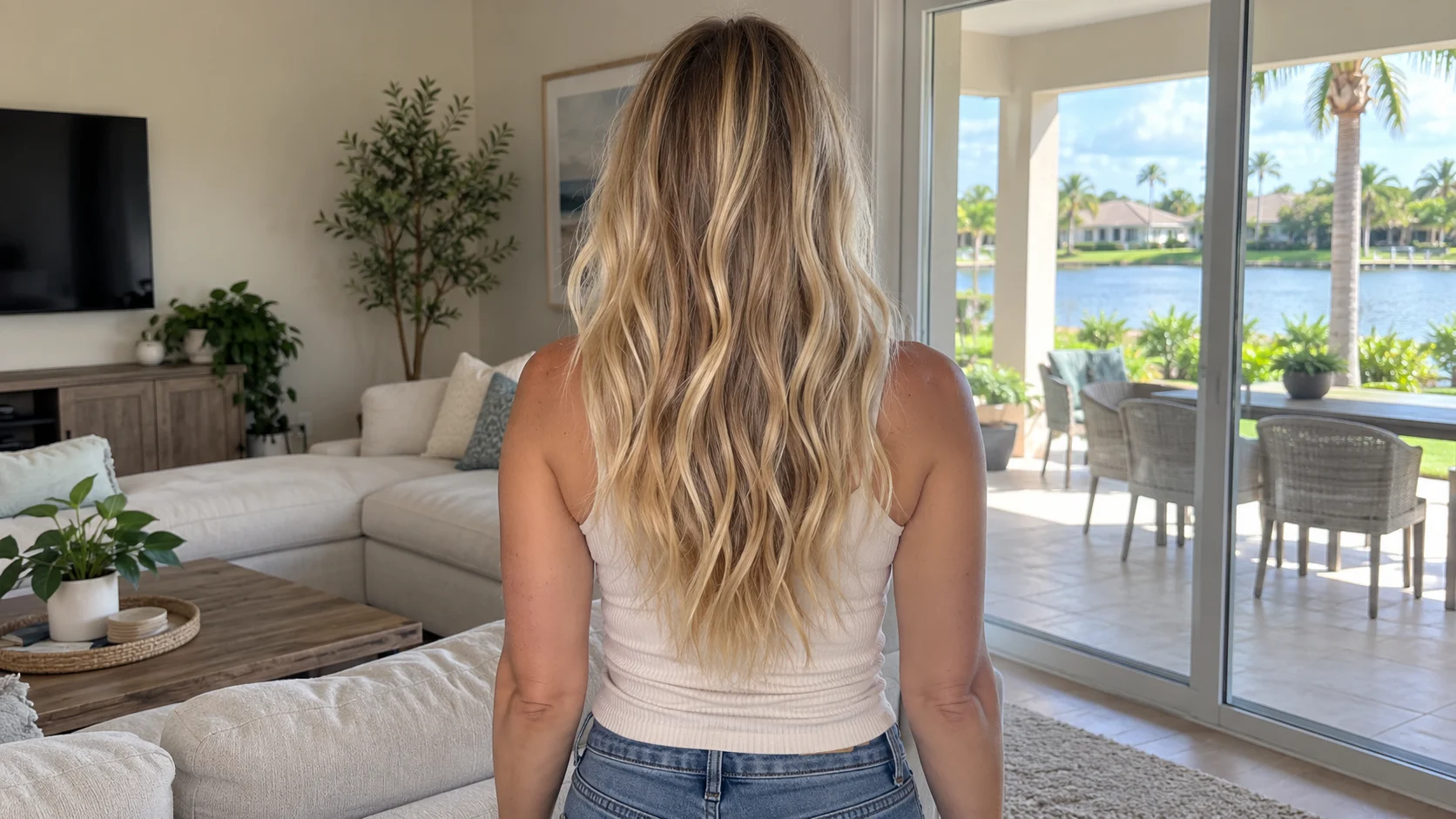
Blonde hair color ideas can range from creamy beige and champagne to honey, ash, platinum, rooted, straight, and curly looks. The biggest difference is not just how light the hair is. Root depth, undertone, highlight placement, and texture can completely change the final result.
This guide compares 17 blonde hair color ideas using clear visual references. Use the examples to narrow down the tone, contrast, and placement you like, then bring your favorite images to a stylist so the result can be adjusted to your current color and hair condition.
17 Blonde Hair Color Ideas to Save
1. Creamy Beige Blonde
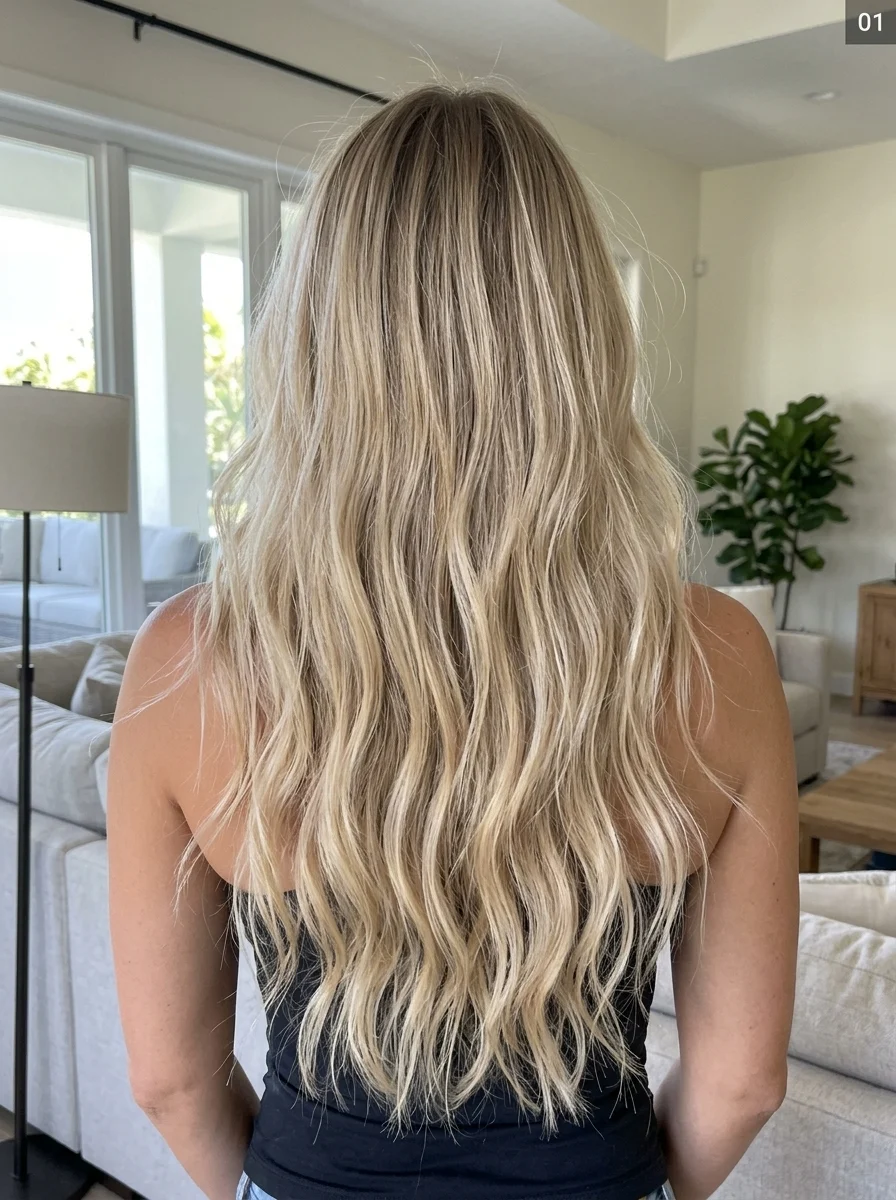
Creamy beige blonde sits between warm and cool, so the overall color feels soft instead of very golden or very icy. A slightly deeper root gives the lighter lengths more dimension while keeping the result natural-looking.
Choose this direction if you want a balanced blonde that still has visible depth. When you save a reference, pay attention to how much darker root you want left and how softly the beige tones blend through the waves.
2. Champagne Blonde
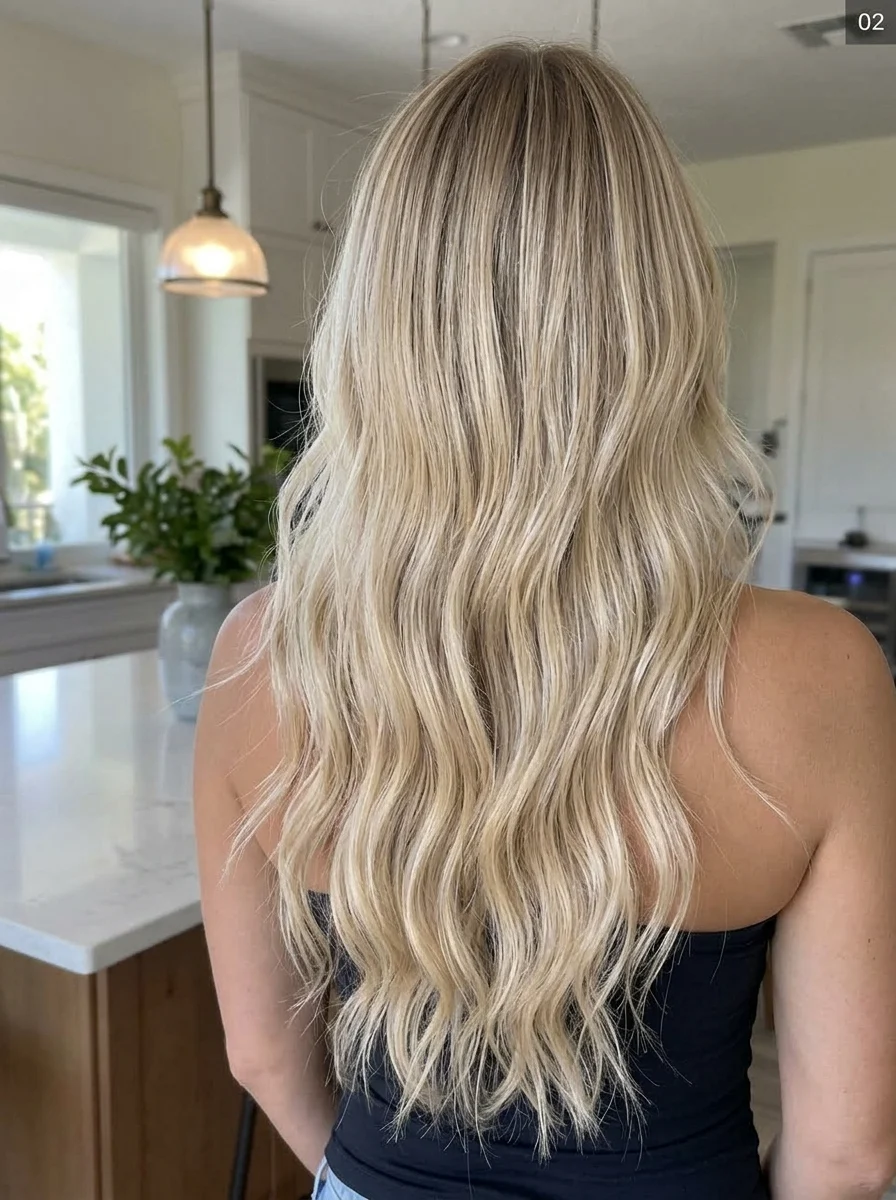
Champagne blonde adds a light pearl-beige tone that feels brighter than a classic beige blonde without becoming flat white. The softer root shadow keeps the color from looking like one solid light block.
This is a useful reference if you want a polished light blonde with gentle warmth. Point out whether you like the brighter pieces spread evenly or concentrated through selected ribbons.
3. Ash Blonde
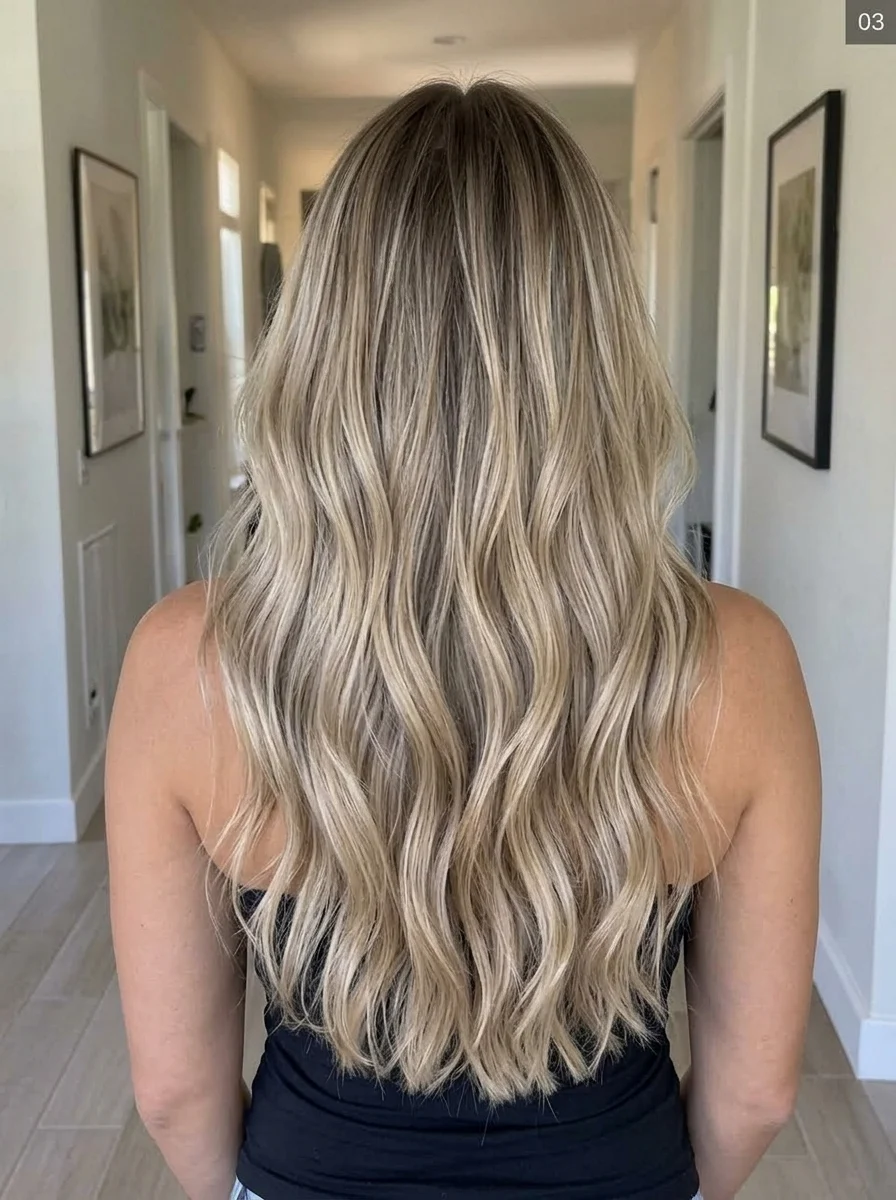
Ash blonde uses cooler beige and smoky tones to reduce visible warmth. The deeper root and lower-contrast lengths help the shade stay dimensional instead of looking gray or metallic.
If you like cooler blonde, use a reference that still shows natural beige depth. That makes it easier to explain that you want a muted cool direction rather than silver, blue-gray, or stark white.
4. Vanilla Cream Blonde
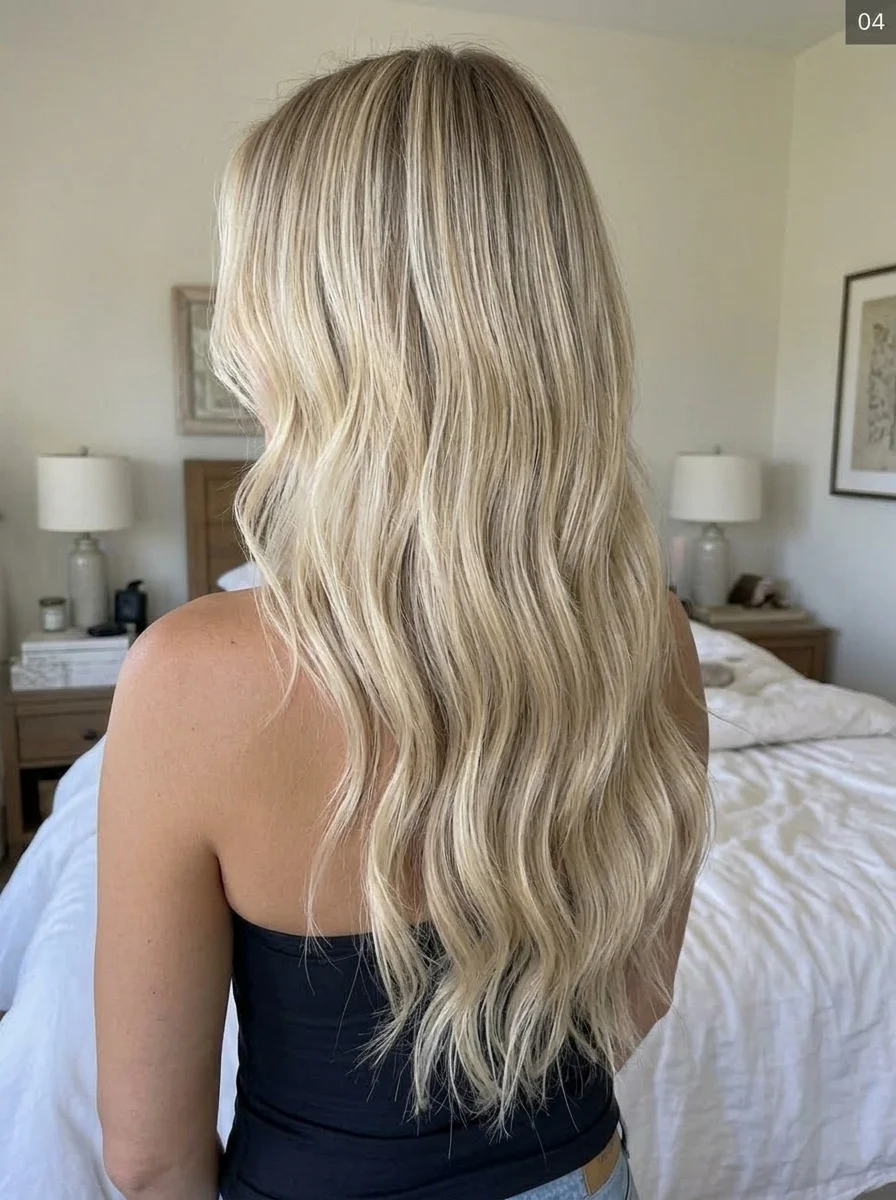
Vanilla cream blonde is light and soft with a gentle creamy warmth. The shade works best visually when there is still enough root depth and tonal variation to keep the hair from looking overly yellow.
This is a good option to save if you want a bright blonde that feels softer than platinum. Look at the crown and ends separately so you can show your stylist how much root shadow and brightness you prefer.
5. Honey Blonde Dimension
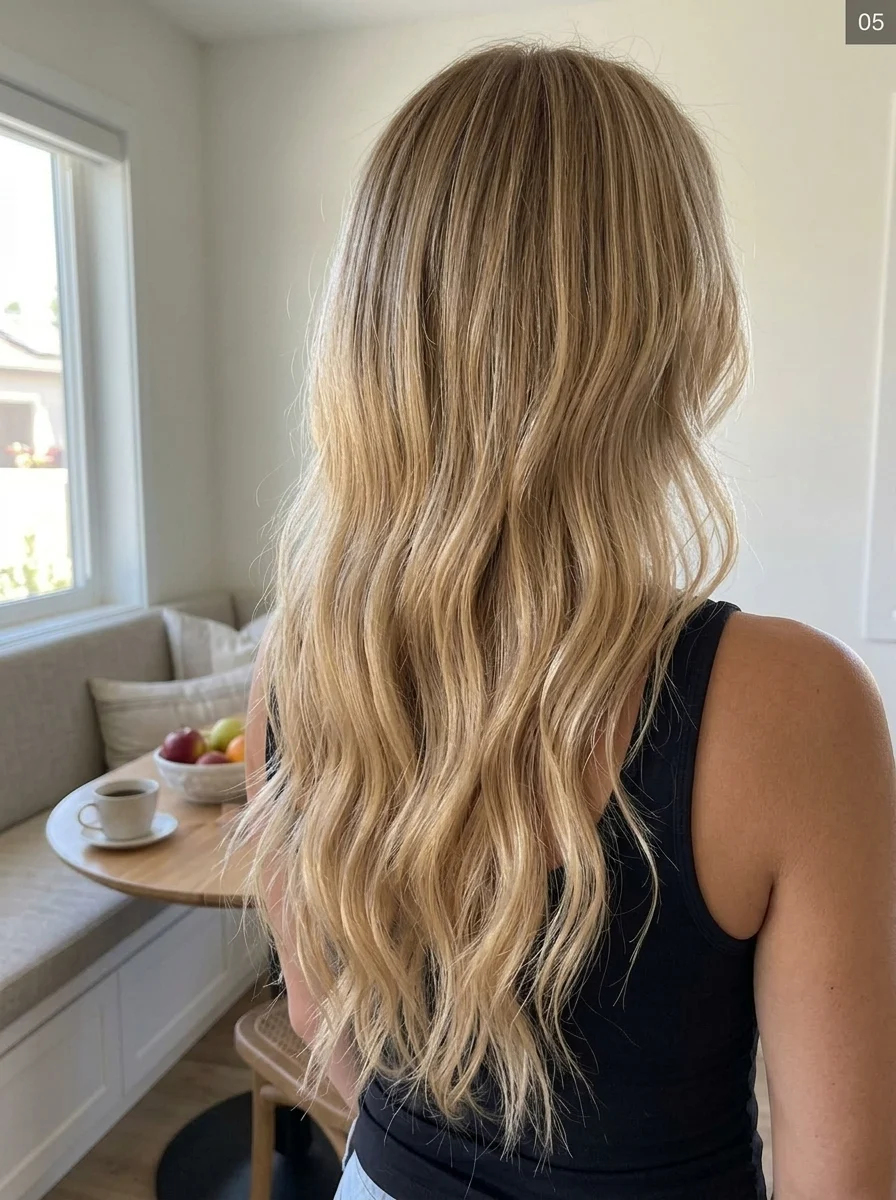
Honey blonde brings more visible warmth into the hair through golden-beige tones. Deeper roots and broken waves keep the result from reading as one flat warm color.
Use this direction if you like a richer blonde with more warmth than beige or champagne shades. The key reference detail is the balance between golden dimension and the deeper blonde base, without pushing the result into orange.
6. Buttery Blonde

Buttery blonde has a soft warm glow with a creamy finish. It is lighter and warmer than sandy blonde, but a natural root and subtle tonal shifts keep the color believable.
This look is useful if you want warmth without a strong gold effect. Save an image where the hair still has visible darker strands and natural movement so the blonde does not look neon or overly uniform.
7. Sandy Blonde
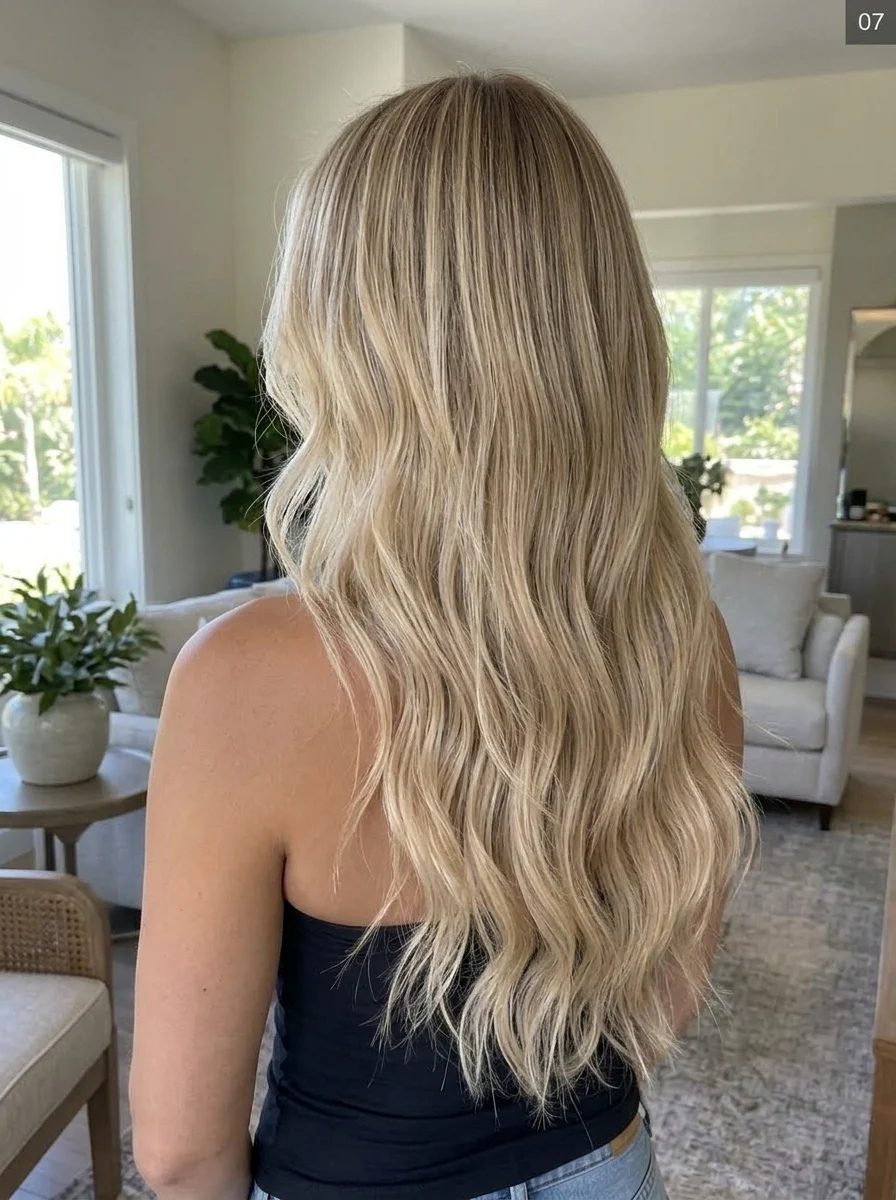
Sandy blonde combines warm-neutral beige tones with a slightly deeper root. It feels more muted than buttery blonde and often looks especially natural when the waves begin lower through the lengths.
Choose this as a reference if you want blonde that feels relaxed and lived-in rather than very bright. The subtle contrast between root, mid-lengths, and ends is what gives the look its depth.
8. Golden Blonde
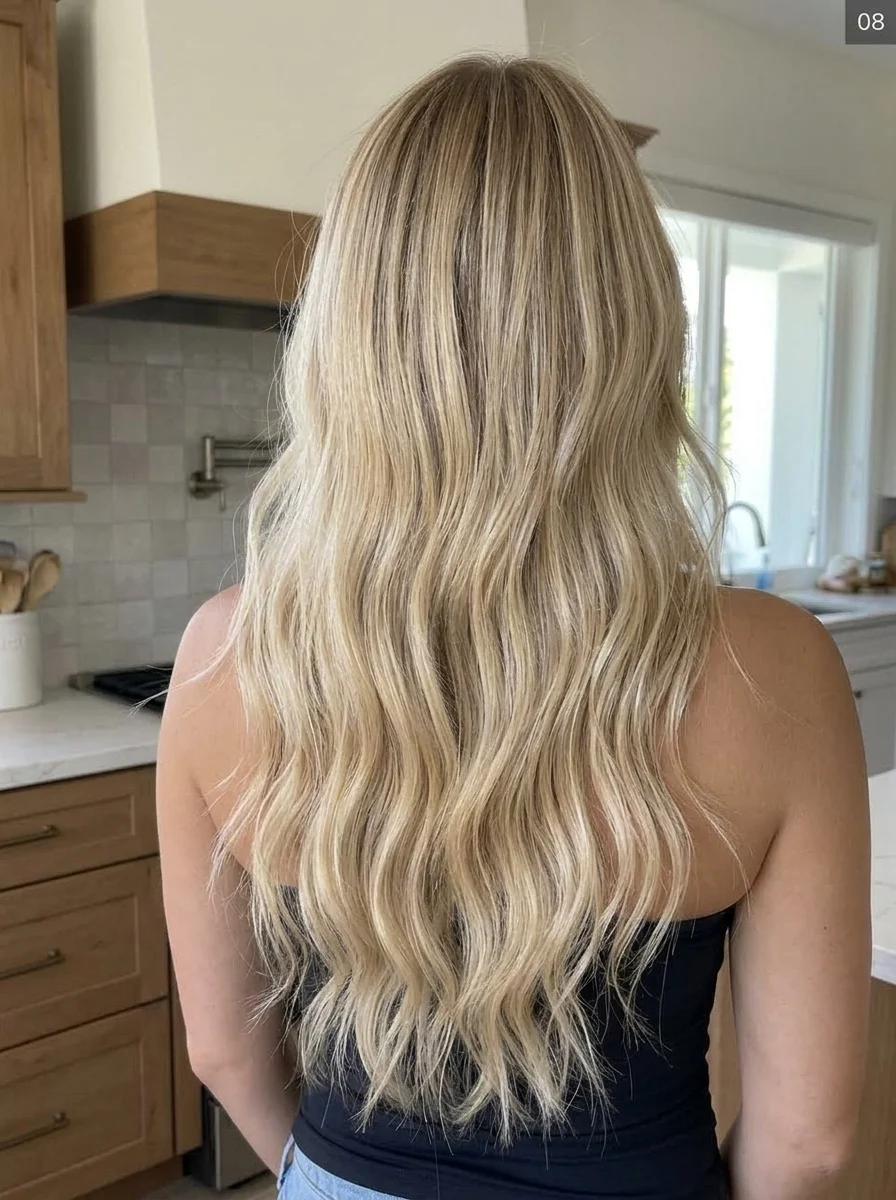
Golden blonde is one of the warmer directions in this gallery. The color stays clearly blonde, but richer golden tones become easier to see through the mid-lengths and waves.
If this is your favorite, show your stylist how much warmth you want and how dark the root should remain. A good reference helps separate a controlled golden blonde from a brassy or orange result.
9. Dark-Rooted Blonde
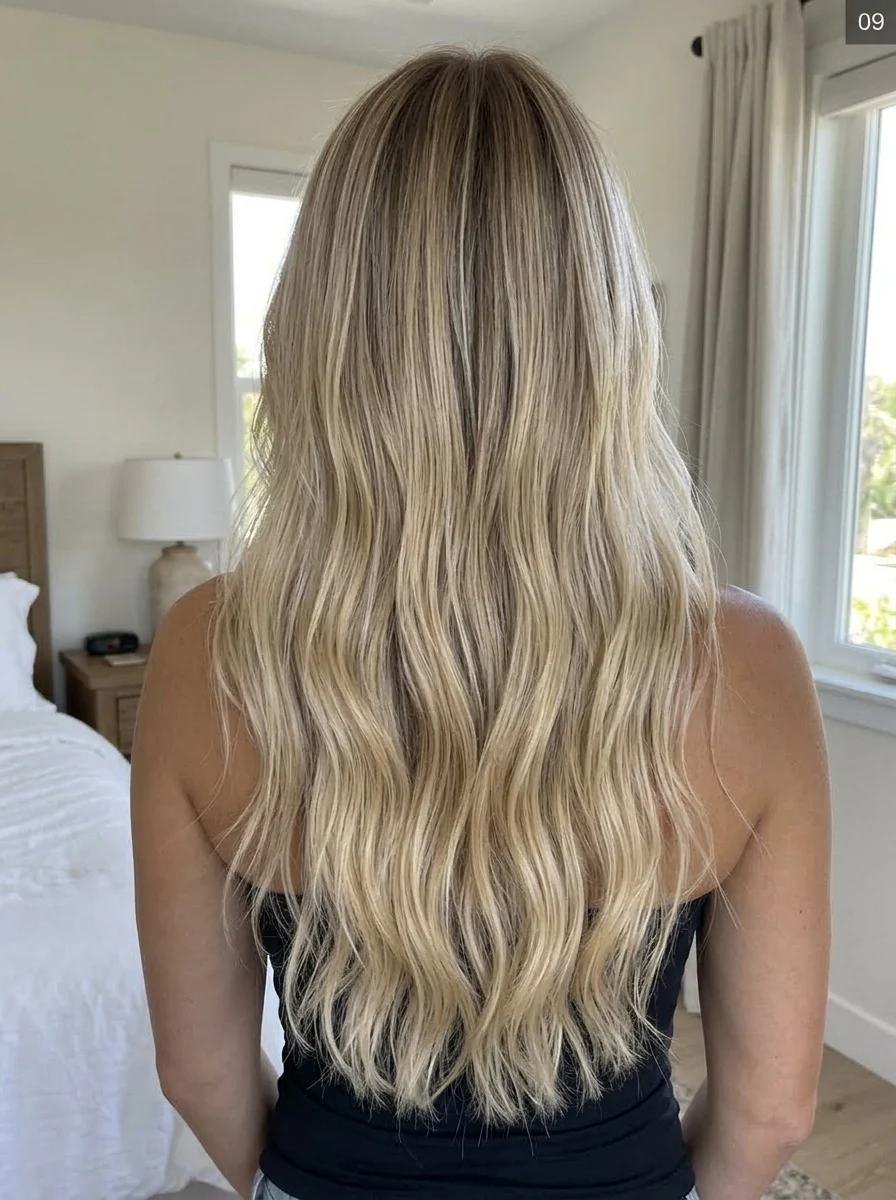
Dark-rooted blonde keeps noticeably deeper color at the crown and blends into lighter beige-blonde through the mids and ends. The contrast is part of the look, but the transition should still feel smooth.
This direction works well as a visual reference if root depth matters to you. Compare how far the deeper root extends and how quickly the lighter blonde begins, because those two details change the overall effect.
10. Pearl Blonde
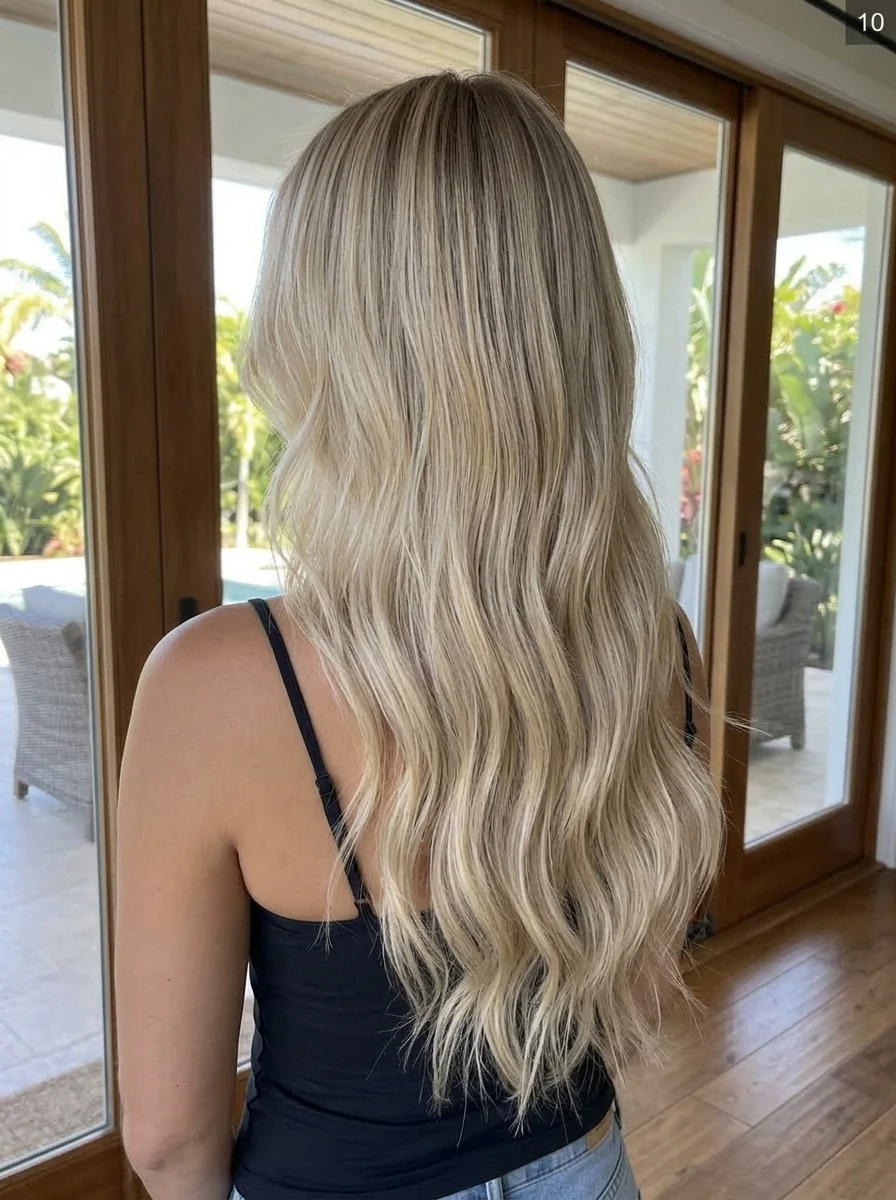
Pearl blonde is a light neutral-cool shade with a soft creamy undertone. It can look bright without becoming icy white when the root shadow and natural strand variation remain visible.
Save this type of image if you like cool blonde but do not want a metallic finish. The most useful detail to point out is the soft beige base underneath the brighter pearl pieces.
11. Icy Beige Blonde

Icy beige blonde sits closer to the cool end of the blonde range, but it still keeps beige depth so the hair does not look silver. Loose bends and a natural root shadow help the lighter lengths look softer.
This is a helpful reference if you want brightness with less visible warmth. Make sure the image you bring shows the exact amount of coolness you like, since “icy” can mean different things to different people.
12. Straight Neutral Blonde
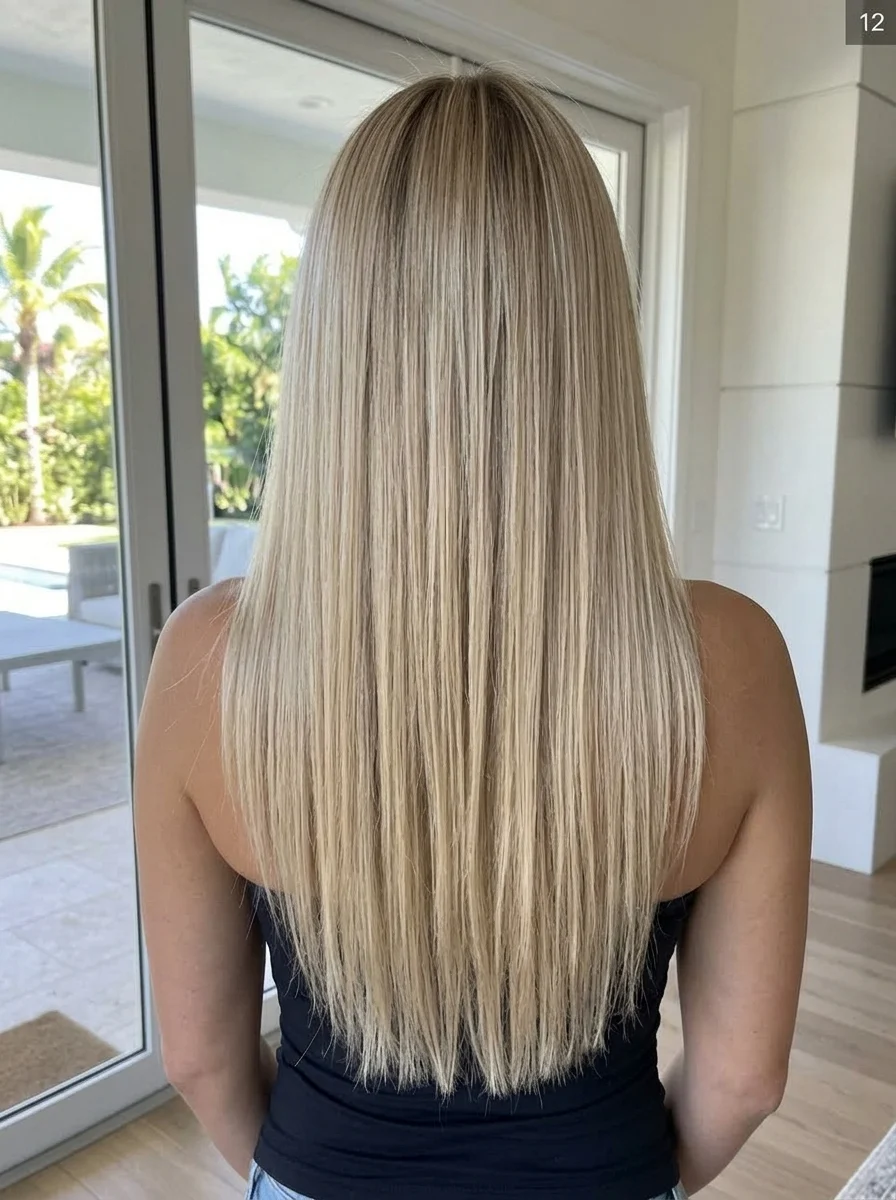
Straight hair makes the color transition easy to read from root to end. In this look, neutral blonde and beige-champagne dimension run through smooth lengths without relying on waves to create visual depth.
Use this as a reference if you wear your hair straight often. It helps show whether you prefer subtle tonal shifts, a stronger root shadow, or brighter fine pieces that remain visible even without curl or wave movement.
13. Rooted Honey-Beige Blonde

Rooted honey-beige blonde blends deeper roots into warm-neutral mids and slightly lighter ends. The warmth is softer than a full golden blonde, giving the hair a balanced mix of depth and brightness.
This is a useful option if you want visible warmth while still keeping a grounded root. When comparing references, look at how gradual the transition is and how much lighter you want the ends to become.
14. Smoky Blonde

Smoky blonde uses muted taupe-beige tones for a cooler, softer effect. It has less visible gold than sandy or honey blonde, while deeper roots help the color stay dimensional.
Choose this direction if you like a subdued blonde rather than a very bright one. A good reference should still read clearly blonde and should not drift into metallic gray.
15. Platinum Babylight Blonde
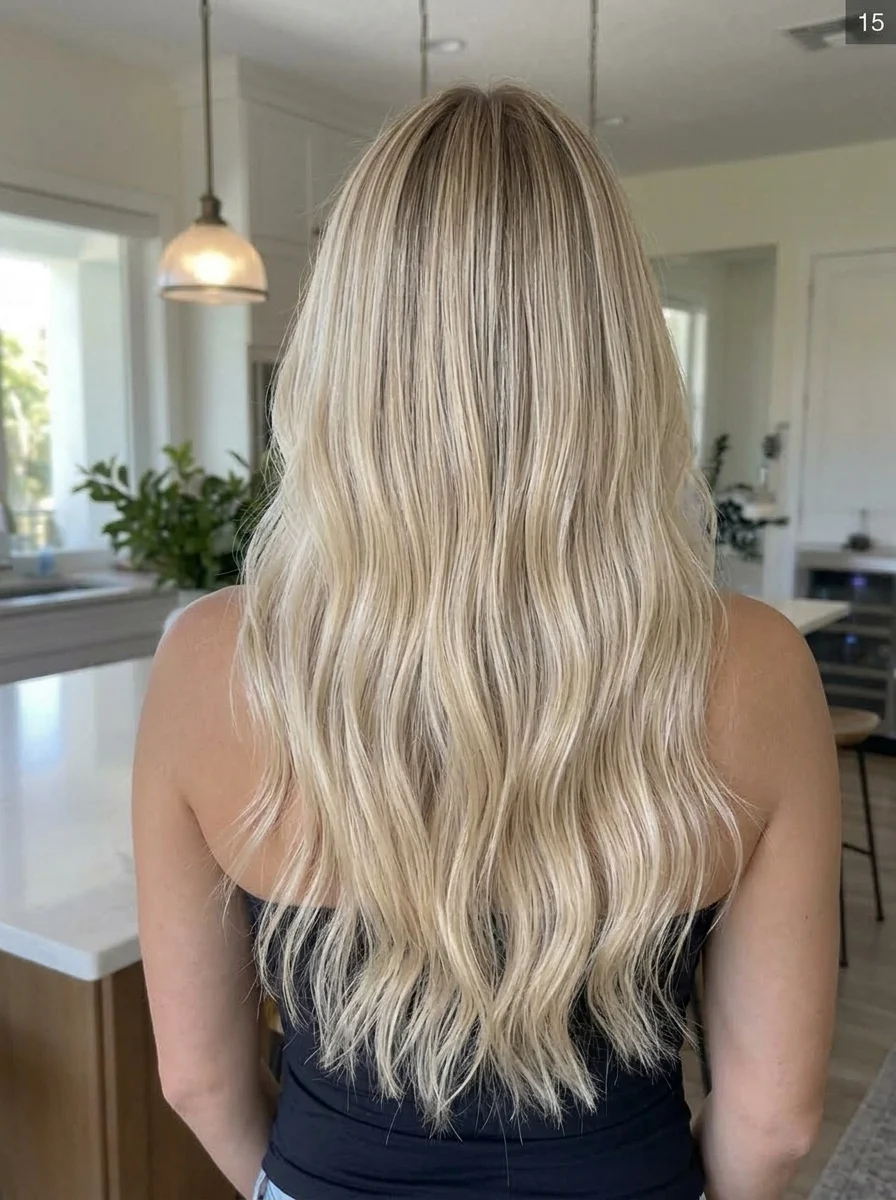
Platinum babylights create a very light blonde effect using fine brighter pieces rather than one flat all-over white tone. Keeping a small amount of natural root depth and softer lowlights helps the result retain dimension.
This is a strong reference if you want a much brighter blonde. Show the fine placement you like and point out that you still want realistic tonal separation instead of a solid white-wig effect.
16. Natural Curly Dimensional Blonde
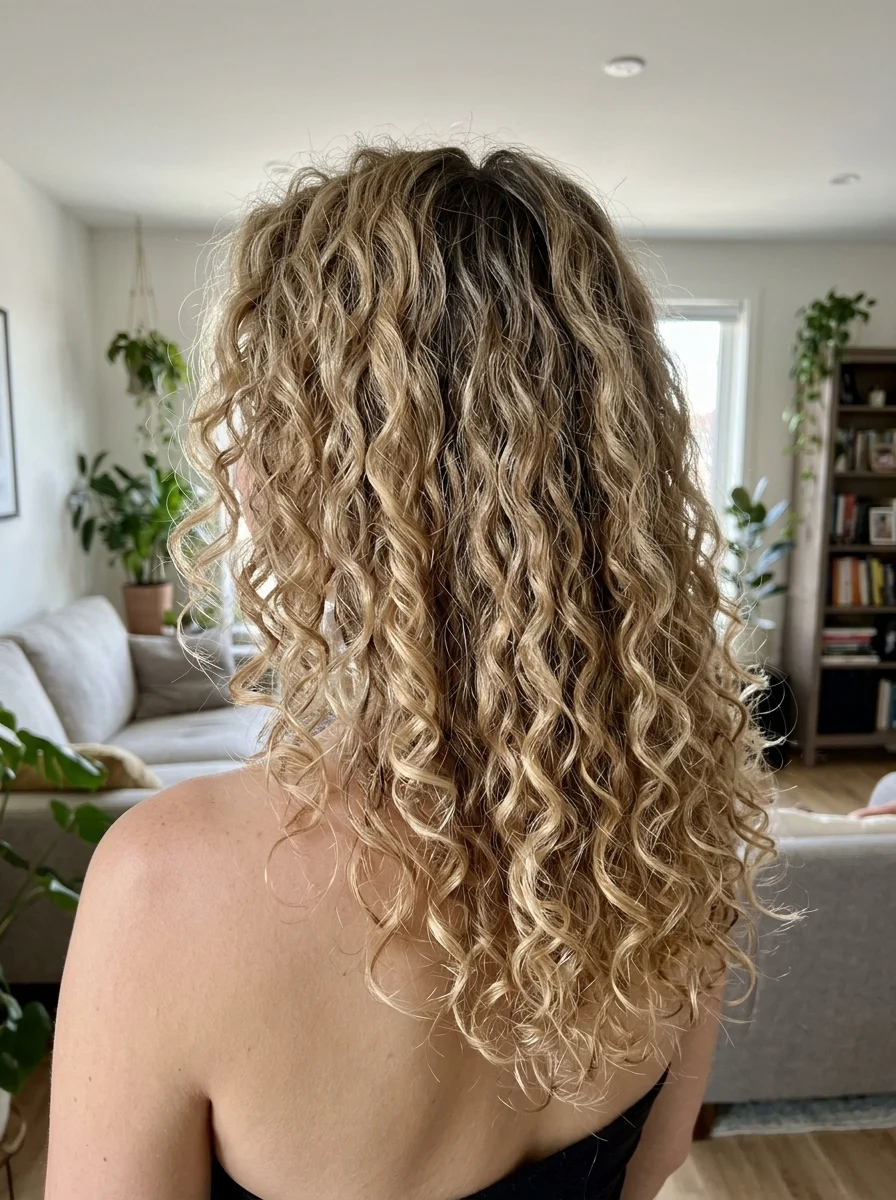
Curly hair shows blonde dimension differently because each curl catches light from a different angle. Deeper roots, beige-honey tones, lighter curls, and slightly darker curls can all appear together without the color looking striped.
If your natural texture is curly, use a curl-specific reference. It helps your stylist see how you want the color distributed through the shape instead of copying placement from a straight or wavy example.
17. Blonde Dimension Detail
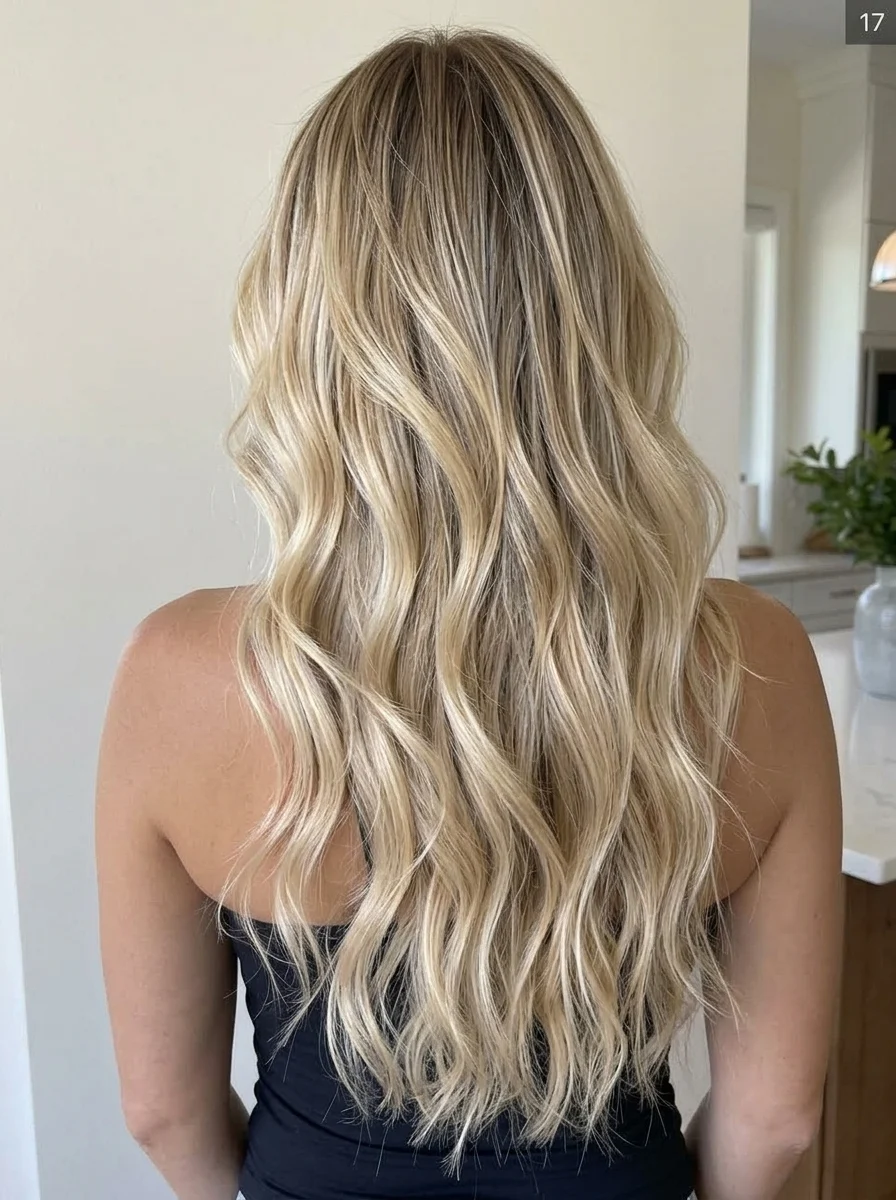
A closer detail image is useful when you care about ribbon size, root depth, and the exact blend between creamy beige, champagne, and brighter blonde pieces. It shows details that can be hard to judge from a wider portrait.
Save one close-up along with your favorite full-hair image. The wider photo explains the overall look, while the detail image helps show the spacing and tonal transitions you want.
How to Choose the Right Blonde Direction
Start with tone. Beige and sandy blonde sit near the middle, honey and golden blonde feel warmer, while ash, pearl, icy beige, and smoky blonde move cooler. Then decide how much root depth you want. A darker root creates stronger contrast, while a softer root makes the color feel lighter from top to bottom.
Next, look at placement. Fine babylights create a different effect from wider ribbons, a root melt, or an almost all-over blonde. Texture matters too. Waves make ribbons easier to see, straight hair shows smooth transitions, and curls create their own light-and-shadow pattern.
What to Ask Your Stylist
Bring two or three reference images and point to specific details instead of asking only for “blonde.” Explain the root depth you like, whether the blonde should lean warm, neutral, or cool, how bright the ends should be, and whether you prefer fine dimension or more visible ribbons.
Also show what you do not want. If you dislike strong yellow, orange, gray, or white tones, say that clearly and use the images to show the boundary. Your starting color, previous color history, hair condition, and desired brightness can all affect the process, so the final plan should be adjusted to your own hair.
Blonde Hair Color Maintenance Considerations
There is no single refresh schedule that fits every blonde. Maintenance can change with the formula, root contrast, starting shade, amount of lightening, washing routine, heat styling, and how much tonal change you are comfortable with between appointments.
Ask your stylist what type of at-home care and refresh plan fits the exact blonde you choose. Rooted and lower-contrast placements may show grow-out differently from very light, high-contrast blonde, so use your reference images to discuss what you want the color to look like as it grows.
Related Hair Color Ideas
If you like softer painted dimension but want to compare it with darker bases, see these brunette balayage ideas. For a warmer direction, compare the blonde shades here with copper hair color ideas.
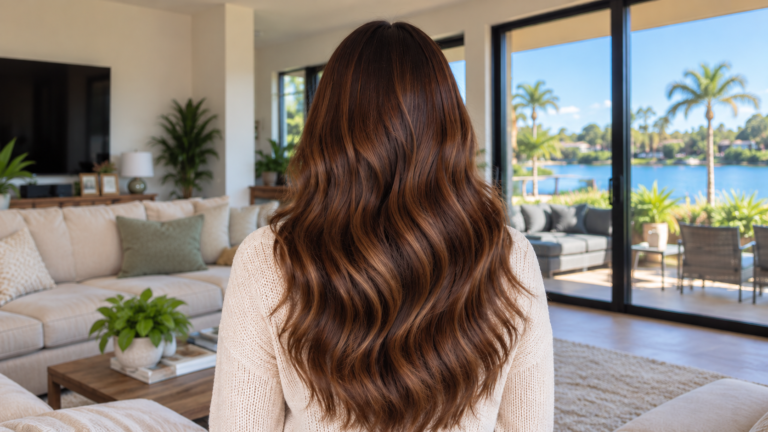
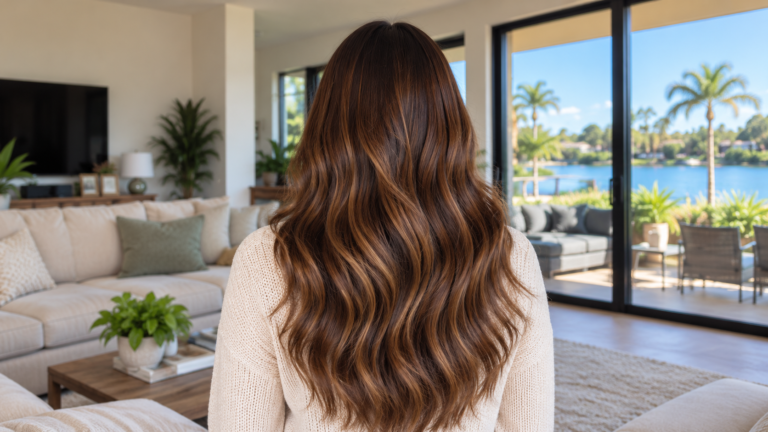
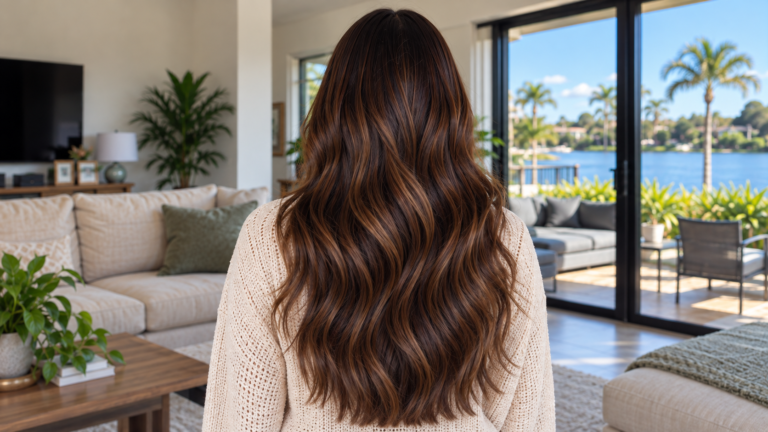
If you are deciding between blonde and a deeper warm-highlight look, these dark brown hair with caramel highlights show a different way to keep strong base depth while adding lighter dimension.
Frequently Asked Questions
What blonde hair color looks the most natural?
A natural-looking result usually comes from believable root depth, tonal variation, and a shade that does not look flat. Beige, sandy, rooted honey-beige, and dimensional neutral blonde are useful references if you prefer a softer effect.
What is the difference between beige blonde and ash blonde?
Beige blonde is usually more neutral, while ash blonde leans cooler and more muted. Both can include darker roots and lighter pieces, so the visual difference often comes from the undertone rather than the overall brightness.
How do I choose between warm and cool blonde?
Compare reference images in similar lighting and focus on the tone you actually like. Honey, buttery, and golden blonde lean warmer; ash, pearl, icy beige, and smoky blonde lean cooler. A stylist can help adapt that direction to your starting hair.
Can blonde hair keep darker roots?
Yes. Dark-rooted, rooted honey-beige, sandy, and many dimensional blonde looks intentionally keep deeper color near the crown. The amount of root depth and how smoothly it blends into the lighter lengths can be adjusted.
What should I bring to a blonde hair appointment?
Bring a full-hair reference for the overall tone and placement, plus a close-up if ribbon size, root depth, or tonal blending matters to you. Point out the exact parts you want to copy and the tones or contrast you want to avoid.
Final Takeaway
Blonde hair color is not one shade. Creamy beige, champagne, ash, vanilla, honey, sandy, golden, pearl, smoky, platinum, rooted, straight, and curly blonde can all create very different results. Choose the tone first, then decide on root depth, brightness, placement, and texture so your reference images clearly show the blonde direction you want.



Comments